
Lutetium PSMA: Potential Benefits, Risks, And Safety Considerations

Lutetium PSMA refers to a class of targeted radioligand therapies that pair a radioactive isotope, typically lutetium-177, with a molecule that binds to prostate-specific membrane antigen (PSMA). PSMA is a cell-surface protein that can be expressed at increased levels on prostate cancer cells; a ligand that recognizes PSMA can deliver localized radiation when labeled with lutetium-177. Descriptions of this approach focus on the mechanism of targeted delivery, the role of pre-treatment imaging to confirm PSMA expression, and the clinical contexts in which such therapy may be considered within oncology care pathways.
In clinical descriptions, lutetium-labeled PSMA compounds are administered intravenously and circulate until they bind to PSMA-expressing tissue; the lutetium component emits beta radiation that deposits energy locally. Identification of suitable candidates often relies on PSMA-targeted imaging, laboratory assessment, and multidisciplinary review. Treatment planning typically accounts for prior therapies, renal function, bone marrow reserve, and overall goals of care. The language around expected outcomes is cautious: effects may vary and are typically evaluated through imaging and laboratory markers over time.
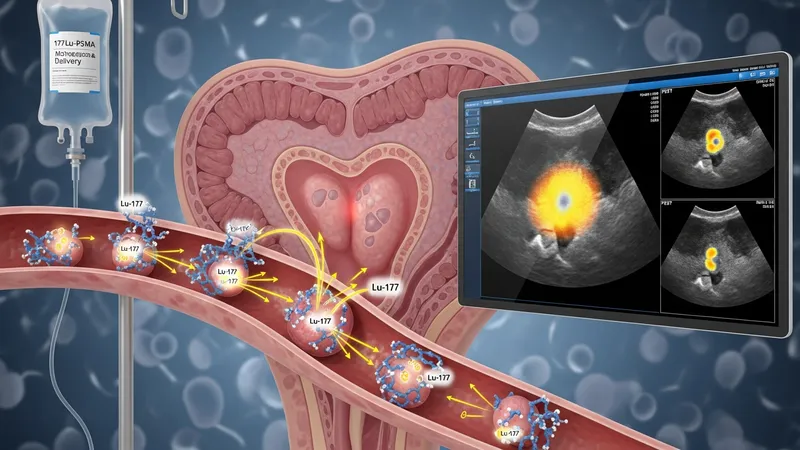
- Lutetium-177 PSMA-617 — a widely studied lutetium-labeled ligand used in clinical trials and observational programs; literature describes dosing regimens and safety profiles without implying uniform results.
- Lutetium-177 PSMA-I&T — an alternative lutetium-labeled agent with reported clinical use in academic and clinical settings; publications discuss pharmacology and comparative evaluation.
- PSMA PET imaging — a diagnostic tool used to identify PSMA expression and distribution prior to considering lutetium-PSMA therapy; imaging guides eligibility and treatment planning.
Comparative descriptions in the literature often examine pharmacokinetic differences, ligand affinity, and biodistribution between lutetium-labeled agents. These comparisons typically use observational data and trial reports and may note variability in uptake in normal tissues such as salivary glands and kidneys. Selection of one agent or another can be influenced by local availability, institutional experience, and trial protocols. When reviews summarize potential advantages, they use cautious phrasing: some agents may demonstrate particular biodistribution patterns or logistical characteristics that affect administration and monitoring.
Potential benefits discussed in clinical summaries include targeted dosing to PSMA-expressing tissue and the ability to treat sites that are difficult to address with other modalities; however, outcomes reported in studies vary by patient population, prior treatments, and extent of disease. Authors typically note that measurable responses by imaging or laboratory markers may occur in some patients, while other patients may have limited or transient changes. Literature emphasizes the importance of multidisciplinary assessment and appropriate use of imaging and laboratory follow-up to interpret results in context.
Risk descriptions in clinical reports commonly highlight hematologic effects (reductions in blood cell counts), salivary gland effects such as dry mouth, and transient constitutional symptoms like fatigue or nausea. Renal excretion of radiolabeled compounds leads to attention on kidney function in patient selection and monitoring. Reports also discuss the need for radiation safety precautions for patients and caregivers immediately after treatment, given urinary excretion and low-level external radiation; guidance is framed conservatively and references institutional protocols and national radiation safety guidelines where available.
Clinical frameworks for monitoring after lutetium-PSMA therapy frequently include regular blood counts, renal function tests, and interval imaging with PSMA PET or conventional modalities to assess distribution and response. Timing and interpretation of follow-up studies are described as variable across protocols; some centers assess response after a set number of cycles, while others individualize assessment intervals. Long-term data remain limited in many series, and publications often underscore ongoing data collection in registries and trials to better characterize durability of response and late effects.
In summary, lutetium-labeled PSMA therapies are characterized by targeted delivery of radiation to PSMA-expressing tissue, reliance on diagnostic PSMA imaging for patient selection, and a monitoring framework that emphasizes hematologic and renal safety. Descriptions in the literature use cautious language about potential benefits and risks and typically recommend multidisciplinary evaluation. The next sections examine practical components and considerations in more detail.