
AI-Powered Email Tools: How Automation Supports Lead Generation Workflows

AI-Powered Email Tools: Lead capture, qualification, and segmentation techniques
Lead capture methods feed the early stages of email workflows and often combine form data, UTM parameters, and behavior signals to create initial contact profiles. AI-enhanced capture can enrich records via public data or lookups, and basic qualification logic may tag contacts according to inferred intent. Segmentation then groups contacts by shared characteristics or engagement patterns; algorithms such as clustering or propensity modeling can reveal microsegments that manual rules might miss. These automated segments typically require validation against downstream outcomes before being used at scale in lead nurture sequences.
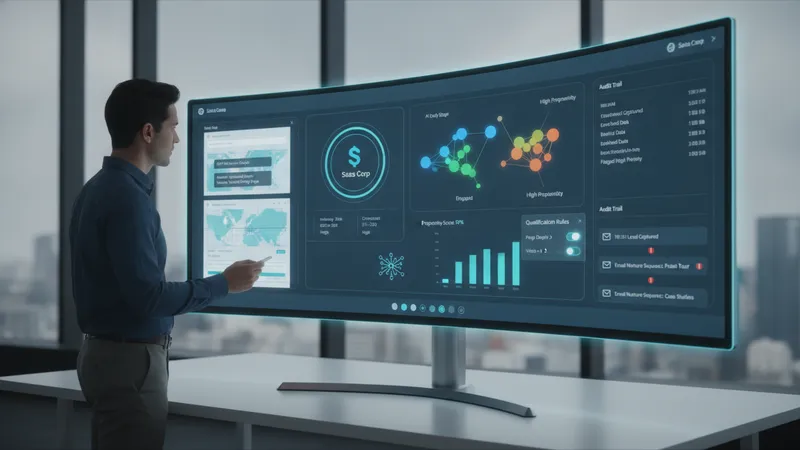
Qualification rules may be hybrid: explicit criteria (e.g., industry or company size) combined with behavioral thresholds (e.g., page depth or repeated visits). Automated systems can flag high-priority contacts for faster follow-up or route them into specialized sequences. It is common to maintain audit trails for qualification decisions, so teams can review why a contact entered a particular pathway. This traceability supports iterative refinement of both capture fields and the models or rules that interpret them.
Segmentation strategies informed by AI often include temporal dimensions, such as recency of interaction or decay functions for older signals. Time-aware segmentation may reduce outreach to contacts whose signals have aged, and it may elevate contacts with fresh interactions. Teams usually implement conservative decay parameters initially and then adjust based on observed engagement patterns. This approach helps balance relevance with the risk of over-communicating to segments that have not recently demonstrated interest.
When configuring automated segmentation, privacy and consent considerations are relevant. Systems should respect opt-out flags and consent records, and segmentation logic may need to exclude contacts or alter processing based on legal and policy constraints. Documenting how segments are constructed and what data sources feed them aids compliance reviews and ensures that automated classification aligns with stated privacy commitments to contacts.