
Business Tools: How To Select And Integrate Solutions For Daily Operations

Types of Business Tools and Their Roles in Daily Operations
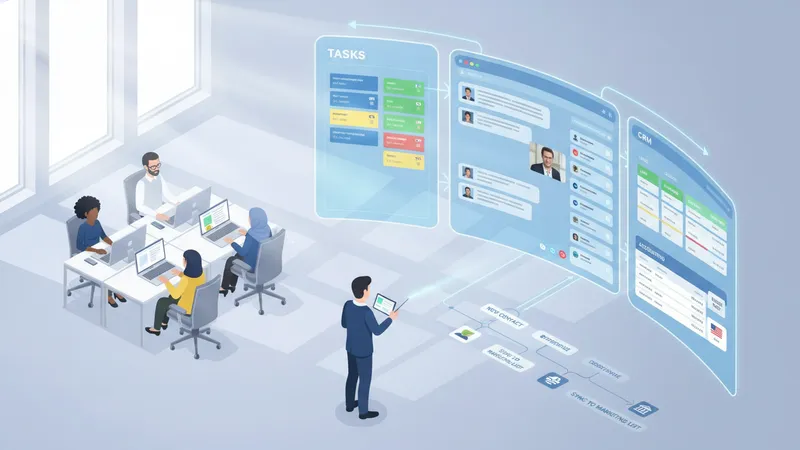
Project management solutions such as Asana and Trello typically support task assignment, timelines, and resource tracking; they may integrate with communication platforms to centralize status updates. Communication tools like Slack and Microsoft Teams often provide persistent channels, file sharing, and meeting capabilities that reduce reliance on email. Accounting and payroll systems such as QuickBooks Online and Gusto generally handle ledgers, invoice processing, and payroll runs that align with IRS requirements and typical U.S. bookkeeping practices.
Customer relationship management (CRM) systems such as Salesforce and HubSpot CRM usually consolidate contact histories, sales pipelines, and marketing touchpoints. These systems can feed downstream reporting tools and are often connected to email platforms and e-commerce systems in U.S.-based sales operations. Workflow automation platforms like Zapier and Workato commonly route data between applications, automating routine steps such as creating invoices from completed projects or syncing contact updates to marketing lists.
Data analysis and business intelligence tools, for example Tableau and Microsoft Power BI, often ingest datasets from accounting, CRM, and operational systems to produce dashboards used by managers and executives. In U.S. contexts, teams often demand exportable reports for board reviews, lender requests, or SBA loan applications. Scalability considerations may lead organizations to choose BI platforms that can connect to cloud warehouses or local databases depending on data volume and reporting cadence.
These tool categories frequently overlap: a project management platform may offer basic time tracking, and a CRM might include simple reporting. U.S. organizations often map these roles to internal responsibilities—finance manages accounting tools, operations or product teams manage project tools, and marketing/sales oversee CRM systems—while IT or external consultants may coordinate integrations or security configurations.