
Cancer Immunotherapy: Key Advances In Targeted Treatment Approaches

Cancer immunotherapy refers to treatments that engage or modify the immune system to recognize and act against malignant cells. Rather than relying solely on cytotoxic agents, these approaches seek to direct immune components—such as T cells, antibodies, and antigen-presenting cells—toward tumor-associated molecules. Targeted treatment approaches within immunotherapy can include cellular therapies that modify immune cells outside the body, antibody-based agents that bind tumor-associated proteins, and vaccine-like strategies intended to prime immune recognition. Each approach aims to increase specificity of the immune response and to limit collateral effects on non-malignant tissues, while acknowledging that responses and risks vary by tumor type and patient context.
These targeted immunotherapy modalities often differ in mechanism, timing, and logistical requirements. Some require complex laboratory manipulation of patient cells, others depend on systemic administration of engineered proteins, and several rely on molecular assays to identify suitable targets. Decisions about which modality may be appropriate typically consider tumor antigen expression patterns, prior treatments, patient comorbidities, and the balance of potential benefits and toxicities. Research and clinical practice increasingly emphasize biomarker-driven selection and combination strategies to address heterogeneous tumor biology and adaptive immune resistance mechanisms.
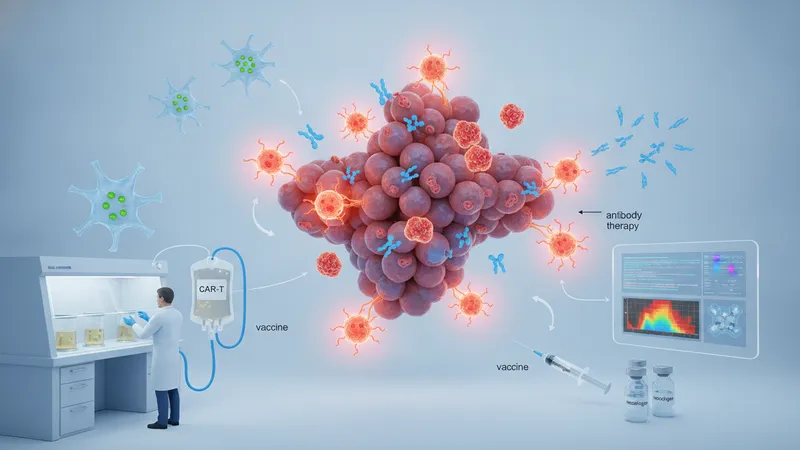
- Immune checkpoint inhibitors — monoclonal antibodies that modulate inhibitory receptors on T cells to enhance antitumor activity; often administered systemically and used across a range of cancers.
- CAR T-cell therapy (chimeric antigen receptor T cells) — adoptive cellular therapy where patient or donor T cells are engineered to target a specific tumor antigen and then reinfused.
- Monoclonal and bispecific antibodies — laboratory-produced antibodies that either bind a single tumor antigen or bridge immune cells to tumor cells to facilitate cytotoxicity.
- Cancer vaccines and neoantigen approaches — formulations intended to present tumor-specific peptides or individualized neoantigens to elicit a directed immune response.
- Biomarker and tumor profiling methods — genomic and immunophenotypic assays used to identify targets, estimate mutational burden, or assess immune infiltrates to guide selection.
Comparative aspects of these modalities often relate to specificity, manufacturability, and time to administration. For example, systemic antibody therapies can typically be produced at scale and administered without individualized cell manufacturing, while adoptive cell therapies may require weeks of ex vivo processing and specialized centers for infusion. Checkpoint inhibitors may induce durable responses in a subset of patients but often require biomarker assessment to estimate likelihood of benefit. Vaccines and neoantigen approaches can be personalized but typically involve sequencing and bioinformatic workflows to identify candidate targets prior to formulation.
Mechanistic distinctions influence toxicity profiles and monitoring needs. Immune-related adverse events associated with checkpoint modulation commonly affect endocrine organs, skin, and the gastrointestinal tract and may require immunosuppressive management. Cellular therapies such as CAR T can be associated with acute inflammatory syndromes and neurologic effects that often require institution-level protocols and critical care resources. Bispecific antibodies may induce cytokine-mediated effects with differing onset and intensity depending on target engagement and pharmacokinetics.
Biomarker and tumor profiling play increasing roles in treatment selection but also have limitations. Commonly used assays include immunohistochemical detection of antigen expression, next-generation sequencing panels that estimate tumor mutational burden, and multiplex immunoprofiling that characterizes tumor-infiltrating lymphocytes. These measures may correlate with response probabilities in some settings but are not determinative for every patient or cancer type. Analytical variability, sampling bias, and evolving threshold definitions mean that profiling results are typically integrated with clinical judgment and trial evidence.
Practical considerations for implementing targeted immunotherapies often include logistical, regulatory, and reimbursement factors. Cellular therapies require manufacturing capacity, shipping logistics, and monitoring infrastructures, while antibody-based approaches involve drug supply and infusion capacity. Clinical trial landscapes also influence access to novel combinations and next-generation constructs. Cost, availability of specialized centers, and multidisciplinary coordination typically affect which modalities are feasible in particular clinical contexts.
In summary, targeted immune-based treatments encompass a range of techniques—from checkpoint modulation and engineered cellular products to antibodies and vaccines—each with distinct mechanisms, profiles, and practical requirements. Selection and sequencing commonly rely on tumor profiling, clinical history, and available infrastructure, and outcomes may vary according to these factors. The next sections examine practical components and considerations in more detail.