
Conveyor Systems Manufacturers: Key Considerations When Selecting Industrial Suppliers

Automation, controls, and customization options from suppliers
Automation features offered by conveyor suppliers frequently include variable-speed drives, programmable logic controllers (PLCs), sensor-based accumulation, and human-machine interfaces (HMIs). Suppliers may present standard control packages that handle basic sequencing and safety interlocks, with options for expanded I/O or communication protocols such as Ethernet/IP, Profinet, or Modbus. Integration with higher-level systems like manufacturing execution systems (MES) or warehouse management systems (WMS) is often a compatibility consideration; suppliers might document supported protocols and typical data outputs to aid system integration planning.
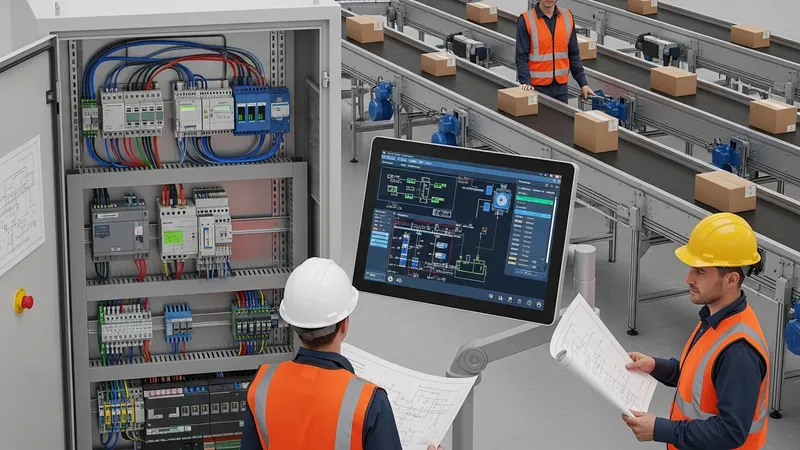
Control customization can range from parameter-adjustable controllers to fully bespoke software for complex sequencing or sorting logic. Suppliers may offer modular control cabinets that match conveyor zoning and allow for phased installation. When considering customization, purchasers often weigh the benefits of tailored functionality against increased commissioning time and documentation needs. Suppliers typically provide example ladder logic, I/O lists, and wiring diagrams that illustrate how custom control elements are implemented, which can help technical teams evaluate integration effort.
Safety-related control features are a consistent part of supplier offerings and include emergency stop circuits, safety-rated speed monitoring, light curtains at access points, and guarded transfer areas. Suppliers commonly reference safety standards and provide options for safety controllers and category-rated circuits. These elements may affect layout and enclosure choices as well as service access. Suppliers frequently document typical safety arrangements and may indicate which elements are part of standard packages versus optional extras, allowing purchasers to compare the scope of included safety controls.
Customization for mechanical routing, infeed/outfeed interfaces, and modular expansion is another area where suppliers vary. Some manufacturers emphasize a catalogue of interchangeable modules that simplify reconfiguration, while others provide fully engineered solutions for unique footprints. Considerations such as spare-parts commonality, ease of field modification, and the degree of on-site assembly required are factual factors that can be compared. Suppliers generally supply drawings and bills of materials that clarify modularity and long-term adaptability.