
Electronic Health Record Systems: Key Features And Core Functions Explained

Digital clinical record platforms are software systems designed to capture, store, and present patient-related information in structured electronic form. They typically organize demographic details, documented encounters, problem lists, allergies, immunizations, and care plans so authorized clinicians can access and review longitudinal patient data. These platforms often combine user interfaces for entering notes with back-end databases that maintain versioned histories and audit logs. The goal in practice is to replace or supplement paper charts with an organized electronic record that supports routine clinical tasks such as documentation, ordering, and care coordination.
Such platforms may include modules for clinical documentation, medication ordering, diagnostic result management, scheduling, and administrative reporting. Data is often presented as discrete fields and narrative text, and systems can support templates, structured forms, and scanned documents. Many implementations also incorporate access controls and encryption to protect data at rest and in transit. Vendors and implementers frequently design workflows to align with clinical roles so that physicians, nurses, and allied staff see relevant information in context during patient encounters.
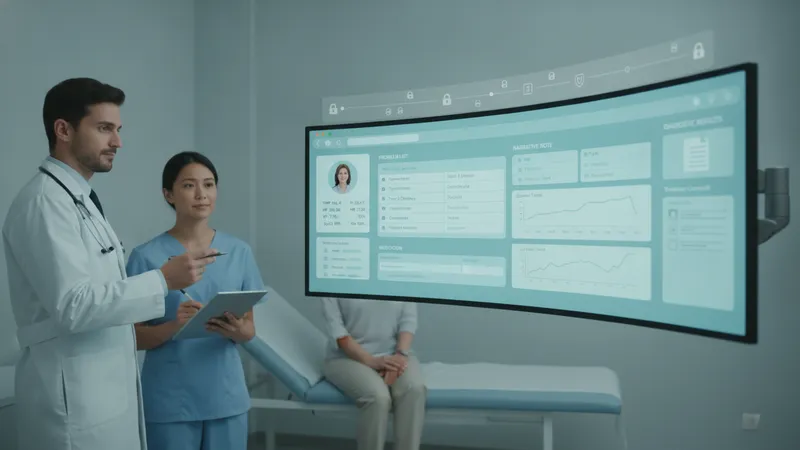
- Clinical documentation and charting modules — structured templates and free-text note tools used to record encounter details and progress notes.
- Medication management and e-prescribing tools — electronic medication lists, order entry, and basic interaction checks that support dispensing and administration workflows.
- Laboratory and diagnostic result management methods — interfaces and structured result displays that integrate lab reports, imaging summaries, and trend visualizations.
Clinical documentation modules often balance structured data entry with narrative text. Structured fields can support decision support, reporting, and coding, while free-text notes capture nuanced clinical reasoning. Implementations may include problem-oriented templates, encounter-specific forms, and specialty-focused note types. Designers commonly allow customization so teams can adapt templates to local workflows, though customization can increase implementation complexity. Attention to template design typically helps reduce duplicate documentation and may streamline data extraction for quality measurement, while careful training can reduce documentation burden on clinicians.
Medication management functions commonly include electronic prescribing, medication reconciliation tools, and basic drug interaction alerts. These features may improve accuracy of active medication lists and support safer transitions of care. Systems often integrate with pharmacy interfaces to transmit prescriptions and may record administration events for inpatient settings. Users should note that alert fatigue can arise when decision support is poorly tuned, so many organizations configure thresholds and suppression rules to focus on clinically relevant warnings rather than every possible interaction.
Laboratory and diagnostic result management usually relies on standardized interfaces and terminology to present results promptly. Many systems incorporate trend charts and result flagging to help clinicians identify abnormal values over time. Integration with laboratory information systems and picture archiving systems often uses technical standards that facilitate automated transfer of results. Where interfaces are not available, staff may use manual entry or scanned reports, which can limit discrete-data availability for reporting and decision support.
Administrative functions such as scheduling, billing integration, and patient communications are frequently bundled with clinical modules or offered as interoperable components. Scheduling tools may support appointment rules, reminders, and resource allocation. Billing-related interfaces often map clinical documentation to billing codes and transmit claims to payers, which can reduce duplicate entry but may require careful mapping and validation. Patient-facing features, such as portals for secure messaging and result access, may support engagement but typically require workflow changes to manage incoming communications effectively.
In summary, these software platforms bring multiple components together to store clinical data, support medication and diagnostic workflows, and connect administrative processes. Implementations may vary in modular structure, customization, and interface support; therefore planning tends to focus on matching system capabilities to clinical workflows, data exchange needs, and privacy requirements. The next sections examine practical components and considerations in more detail.