
Electronic Health Record Systems: Key Features And Core Functions Explained

Administrative, scheduling, and billing features associated with electronic health record systems
Administrative modules often include appointment scheduling, resource management, and patient registration functions. Scheduling tools may support recurring appointments, room and equipment allocation, and waitlist management. Effective scheduling typically requires configuration to reflect a facility’s resource constraints and visit types, and organizations commonly create rules for booking lead times and visit durations. Integrating scheduling with clinical workflows can reduce double-booking and improve patient flow when calendars reflect real-world constraints.
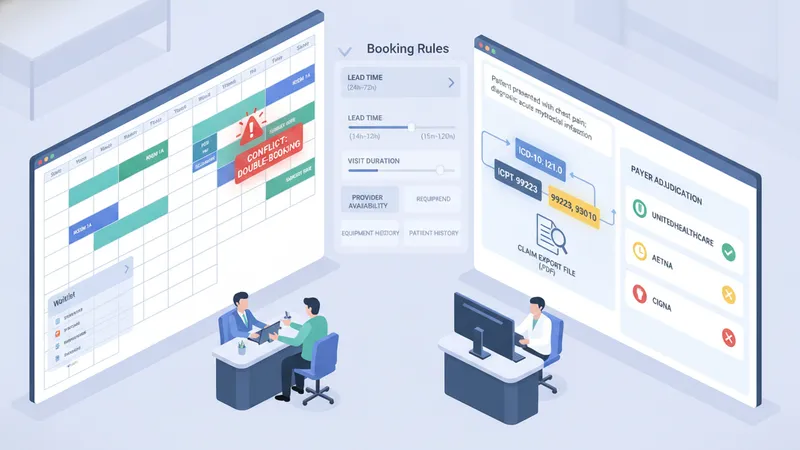
Billing integration connects coded clinical documentation to billing systems to support charge capture and claims submission. Systems may map clinical encounters to billing codes, generate claims files, and track payer adjudication status. Accurate mapping and validation of coding rules can reduce denials and rework. Organizations commonly maintain separate workflows for clinical documentation and billing review to ensure that clinical notes reflect services delivered while billing entries adhere to payer policies and coding guidelines.
Patient engagement features such as secure messaging, appointment reminders, and portal access are frequently linked to administrative workflows. Secure portals may allow patients to view parts of their record, request appointments, and complete pre-visit forms. Implementers often assess how incoming messages will be triaged and who will respond, recognizing that enabling patient access tends to shift some administrative and clinical workload and may require staffing adjustments and clear response-time expectations.
Performance monitoring and operational reporting support continuous improvement of administrative processes. Dashboards for no-show rates, average scheduling lead time, and billing denial rates may help teams identify bottlenecks. Organizations often apply iterative changes and monitor metrics before and after workflow adjustments. These monitoring activities are typically presented as part of routine operational governance rather than prescriptive mandates, allowing teams to prioritize improvements that align with local goals and constraints.