
Frozen Food Logistics: Key Steps In Cold Chain Management And Distribution

Managing temperature-sensitive food items requires an end-to-end system that preserves product quality from processing to final delivery. This system centers on maintaining specified temperatures, preventing thermal excursions, and coordinating handling steps across storage, transport, and distribution nodes. Logistics personnel typically balance equipment selection, handling procedures, regulatory compliance, and data capture so that frozen items remain within target ranges and retain intended shelf life and safety characteristics.
Effective frozen-product logistics typically involves coordinated processes rather than a single technology. Key activities often include controlled freezing, insulated packaging, refrigerated transport, monitored warehousing, and documented handoffs between parties. Each activity can introduce temperature risk, so firms commonly implement verification points and contingency procedures to limit exposure and to document conditions for traceability and quality control.
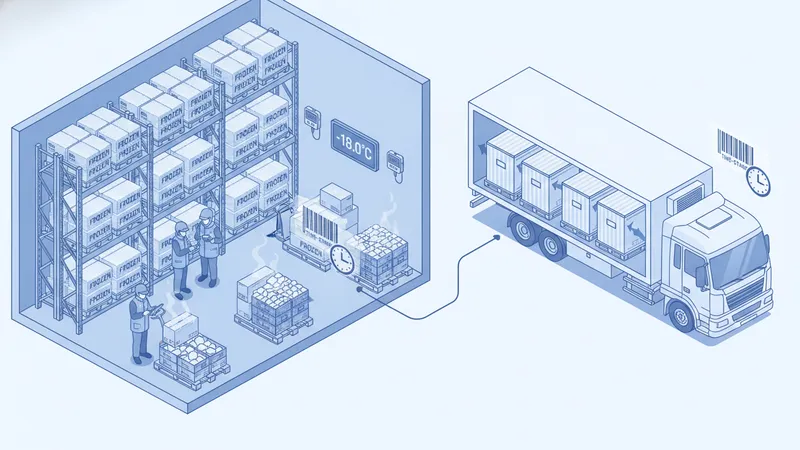
- Refrigerated transport units (reefers): insulated trailers or containers with active refrigeration, used for long-haul and last-mile movement; capacity and power types may vary by operator.
- Temperature monitoring systems: data loggers, wireless sensors, and cloud platforms that record and report temperature history across the chain for traceability and compliance.
- Cold storage and freezing equipment: blast freezers and refrigerated warehouses designed to achieve and hold target temperatures for bulk storage and staging prior to distribution.
Regulatory frameworks and food-safety standards often frame operational requirements for frozen supply chains. Requirements typically include documented temperature ranges, validated cleaning and sanitation practices, and records of temperature monitoring. Compliance can involve inspections and structured recordkeeping so that traceability is available in case of quality incidents. Organizations often align internal procedures with widely used standards and may use validation testing to demonstrate that freezing and storage steps meet specified parameters.
Packaging and palletization play a practical role in thermal protection and handling efficiency. Insulating materials, phase-change materials, and correct pallet stacking patterns can influence heat transfer and airflow within a load. Packaging selection often considers product fragility, required holding time, and handling environments; for example, some products may require secondary barriers or sealed cartons to limit moisture migration. Proper labeling and segregation of batches can also assist downstream inventory rotation and quality checks.
Inventory control systems for frozen foods commonly integrate temperature logs with stock-keeping records to support first-expiry-first-out or similar rotation approaches. Automated alerts tied to monitoring systems may notify responsible staff when readings deviate from setpoints, enabling review and corrective response. Inventory visibility across warehouses and transport may improve planning for replenishment and reduce time that products spend in transitional zones where temperature control may be less consistent.
Temperature excursions and their mitigation are a focus for preserving quality. When excursions occur, organizations often assess exposure duration, recorded temperatures, and product-specific vulnerability to determine disposition options, which can include rework, testing, or removal from distribution. Corrective actions commonly involve root-cause analysis, equipment maintenance, staff retraining, and adjustments to handling practices to reduce recurrence while maintaining documented evidence of steps taken.
In summary, frozen product logistics is a coordinated set of processes that relies on controlled freezing, thermal protection, monitored storage and transport, and documented handoffs to maintain quality. Multiple equipment types, monitoring methods, and procedural controls typically work together to reduce risk and support traceability. The next sections examine practical components and considerations in more detail.