
Google AI Business: Understanding Core Tools And Capabilities For Organizations

Types of AI tools and developer platforms for organizations
Developer platforms and tool types relevant to Google AI Business: Understanding Core Tools and Capabilities for Organizations include managed ML platforms, analytics warehouses, data-processing pipelines, and API endpoints for inference. Managed ML platforms often provide interfaces for training, hyperparameter tuning, model registry, and deployment; they may support built-in algorithms and custom containerized models. Analytics warehouses typically offer SQL-based model creation and large-scale query engines that can be used for feature extraction. API endpoints and SDKs allow applications to call trained models for inference, and these are commonly wrapped with monitoring and quotas to control usage patterns.
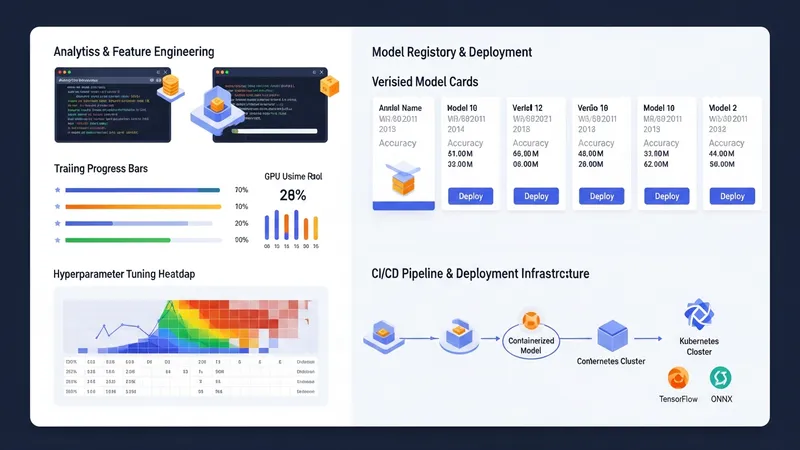
When evaluating types of tools, organizations often consider interoperability with existing CI/CD processes and data systems. Tools that integrate with common orchestration frameworks or support standard model formats (e.g., TensorFlow SavedModel, ONNX) may simplify deployment across environments. For teams that prefer low-code options, some platforms supply graphical model-building interfaces or AutoML-like capabilities; these can speed prototyping but may require additional scrutiny around transparency and control. Typical trade-offs include developer productivity versus the need for detailed model configuration and observability.
Data pipeline and preprocessing tools are frequently part of the same ecosystem and can range from streaming ingestion utilities to batch transformation services. Effective pipelines may include validation steps, label management for supervised learning, and versioned feature stores to ensure consistent feature calculation between training and serving. Organizations often plan for metrics that capture data drift and feature distribution changes, which may trigger model retraining or human review when thresholds are exceeded. These operational elements can influence tool selection and resource planning.
Insider considerations include planning for incremental adoption and skills development: teams may start with small, well-scoped pilots that use managed services to reduce operational overhead, then migrate to more custom setups as requirements mature. Documentation, community resources, and available professional support are practical factors that can affect developer ramp-up time. Organizations may also assess vendor-provided examples and reference architectures to estimate integration effort and ongoing maintenance responsibilities.