
Halloween DIY: Step-by-Step Ideas For Last-Minute Home And Party Decorations

Materials and tools for paper-based crafts and ornaments related to Halloween DIY: Step-by-Step Ideas for Last-Minute Home and Party Decorations
Paper-based projects often rely on a narrow set of tools that may already be available: scissors, craft knives for experienced users, rulers, pencils, and basic adhesives such as glue sticks or double-sided tape. Common paper types include printer paper for silhouettes, lightweight cardstock for freestanding forms, and tissue paper for layered textures. Lightweight materials typically allow faster work because they require no drying; heavier papers may need adhesives that set more slowly. Consider keeping templates on hand so repeated shapes can be traced and cut quickly, which reduces decision time during last-minute preparation.
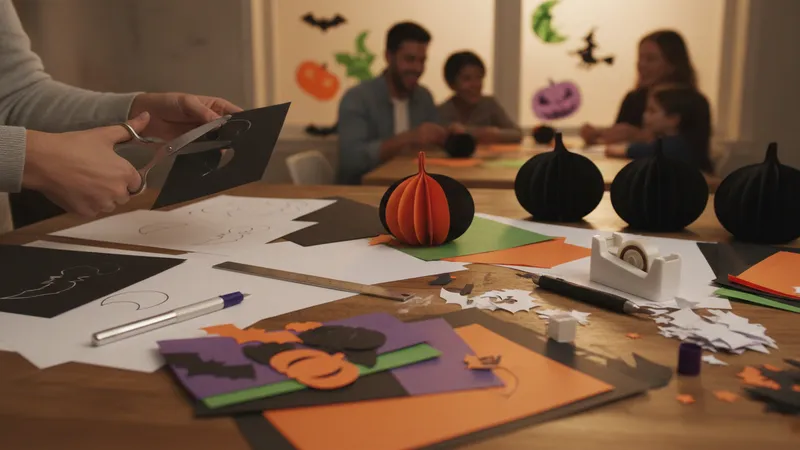
Simple patterns, such as repeated bats, crescent moons, or geometric pumpkins, may be created using a single template and traced multiple times. Folding techniques that produce three-dimensional ornaments—such as accordion folds or cone shapes—often create volume without complex assembly. For window and wall displays, backing a paper cutout with contrasting paper or placing it on a translucent surface can increase visibility. When working with groups, pre-cutting key pieces can enable quicker assembly and finishing by others.
Surface treatments for paper may include light washes of water-based paint, marker accents, or ink stamping; these tend to dry rapidly and add texture without long waits. For projects that will be handled frequently, reinforcing attachment points with small strips of tape or tabs may increase durability. If paper items will be combined with lighting, ensure openings and attachment points are sized to avoid pinching or overheating small battery units; battery LED lights that are low-heat and shielded behind paper typically reduce thermal concerns compared with open flames.
Packaging and storage during the preparation phase can affect speed. Organizing cut pieces into labeled stacks or trays—grouped by placement such as table, wall, or hanging—may make final setup faster. Templates and simple instruction notes can be reused for similar events in future years, turning an initially improvised approach into a repeatable process. These organizational steps often reduce last-minute decision-making and may allow more consistent results across multiple decorative elements.