
Home Automation: How Connected Devices Transform Everyday Living

Smart Lighting and Climate Control in Home Automation
Smart lighting and climate control represent two of the most visible applications of connected devices in everyday living. Networked lighting can provide scene-based controls, adaptive schedules, and occupancy-based activations; climate controls can adjust setpoints based on time, presence, or external temperature inputs. In many installations, thermostat devices may incorporate multiple sensors or integrate data from separate occupancy detectors to reduce conflicting signals. When planning these systems, designers often consider sensor placement, wiring constraints, and whether control logic should reside locally or in a cloud service to balance responsiveness with remote access.
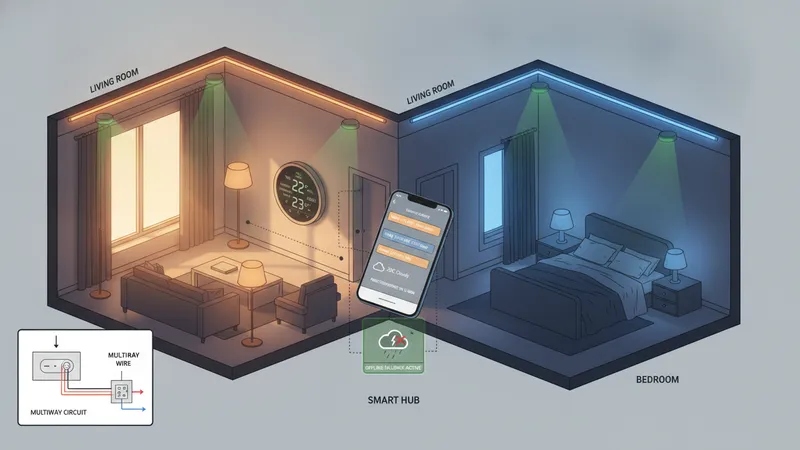
Performance and perceived benefit typically depend on how these devices are configured to match occupant routines. For example, coordinating lighting scenes with wake and sleep schedules may reduce manual adjustments, while setback schedules for heating or cooling can limit unnecessary runtime. Some households may integrate weather-aware scheduling, where forecast data influences preconditioning periods. Practical considerations include compatibility with existing wiring (e.g., neutral wires for smart switches), load handling for multiway circuits, and ensuring that automation rules include fallback behavior during connectivity outages.
Energy and comfort interactions often require modest calibration rather than large, immediate changes. Thermostats with adaptive algorithms may learn typical usage patterns and propose setpoint adjustments that occupants can accept or refine. Similarly, dimming and color temperature adjustments may be tuned to reduce visual fatigue at different times of day. Implementers commonly monitor performance over weeks to identify unusual cycles or occupancy mismatches and then adjust rules or sensor placement accordingly. This iterative approach can lead to more stable, occupant-aligned automation.
Security and access management are relevant when lighting and climate devices are exposed to remote control. Accounts and device endpoints that permit remote adjustments should be subject to appropriate authentication and, where available, multi-factor controls. Network segmentation—placing IoT devices on a separate subnet—can also limit lateral exposure from compromised endpoints. Routine firmware updates and awareness of cryptographic defaults can reduce known vulnerabilities. Such operational considerations are part of maintaining reliable, predictable lighting and climate automation.