
Hot Water Heater Repair: Understanding Causes Of Leaks And Inconsistent Temperature

Residential hot water systems that develop leaks or deliver uneven temperature often require a methodical assessment of their components and operating conditions. Repairs typically focus on locating the source of fluid escape—such as joints, valves, or the tank body—and identifying electrical or fuel-delivery elements that influence water temperature. A clear diagnostic approach separates visible plumbing faults from internal component failures, and frames subsequent interventions as either targeted part replacement, routine maintenance, or larger system work when the tank or heat exchanger is compromised.
Understanding the relationships among corrosion, pressure, sediment, and control devices can clarify why a system leaks or why output varies from tap to tap. For example, mineral accumulation can insulate heating elements and shorten their effective life, while rusted fittings can allow slow seepage. Likewise, thermostat drift or a failing temperature-and-pressure component can cause intermittent temperature changes. Observing patterns—time of day, which taps are affected, whether the issue follows recent work—helps narrow likely causes before any repair steps are taken.
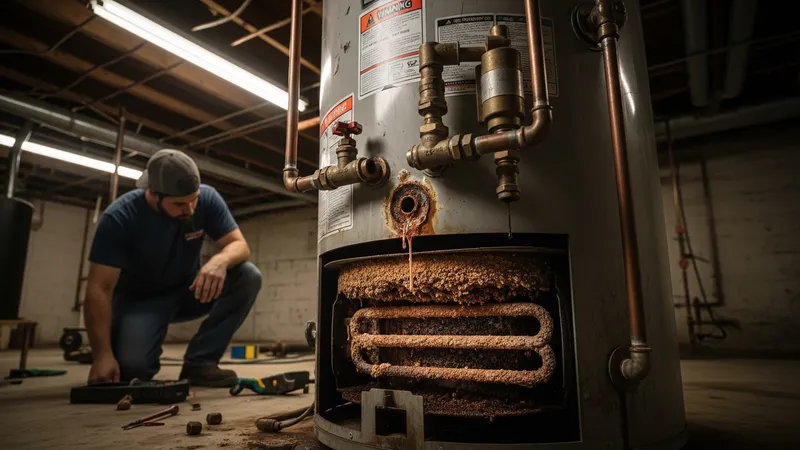
- Flushing and sediment removal — Routine draining to remove mineral buildup that can reduce heating efficiency and may cause inconsistent temperature at fixtures.
- Heating element and thermostat servicing — Inspection and testing of electric elements or thermostats; replacement of failed elements or recalibration of control thermostats may restore stable temperatures.
- Pressure and valve inspection — Examination of the temperature-and-pressure (T&P) relief valve, drain valves, and supply fittings for leaks, corrosion, or mechanical failure that can produce visible leakage or pressure-related discharge.
Corrosion and deposit-related degradation often contribute to both leaks and temperature irregularities. Corrosion can form at weak points on tanks or fittings and may be visible as rust stains or pitting; deposits tend to collect near the bottom of tanks and around heating elements. These processes may progress slowly, so routine observation and documentation of any new wetness, stains, or noises can provide diagnostic clues. When diagnosing, isolating the system (shutting off water or power) before inspecting pressurized components is a typical safety precaution to reduce unintended water flow or electrical hazards.
Electrical and control issues commonly explain inconsistent hot water delivery in electric systems. Heating elements can develop hot spots or open circuits, and thermostats may drift from setpoints with age. In gas-fired systems, burner performance, pilot stability, or blocked vents can affect heat transfer to the water. Testing components with a multimeter, observing burner flame behavior, and comparing inlet and outlet temperatures at the tank can help identify which subsystem may be responsible for temperature variation. Such diagnostic steps may often be performed by informed homeowners or service technicians using basic tools and measurement techniques.
Valve-related leaks and pressure problems frequently stem from mechanical wear or improper settings. The temperature-and-pressure relief valve is designed to discharge under overpressure or overtemperature conditions and may drip if partially stuck or if system pressure exceeds expected ranges. Supply-line fittings and drain valves may loosen over time or develop worn threads and seals. Addressing these issues typically involves tightening, replacing seals or washers, or installing new valves when components show signs of material failure. Accurate assessment requires observing the leak source during both idle and operational states.
Maintenance routines such as periodic flushing, checking sacrificial anode rods, and inspecting external fittings often reduce the rate at which leaks or temperature inconsistencies develop. Flushing may dislodge sediment that otherwise insulates elements or abrades tank linings; replacing anode rods can slow corrosion within steel tanks. These measures may extend component life and stabilize performance patterns, although they may not reverse advanced corrosion or mechanical failure. Careful records of service dates and observed conditions can inform decisions about more extensive repairs or system replacement over time.
In summary, systematic evaluation of plumbing connections, valves, heating elements, controls, and internal deposits can clarify why a water heater leaks or provides uneven hot water. Early inspection often reveals manageable issues such as loose fittings or sediment accumulation; more advanced signs like widespread corrosion or repeated control failures indicate broader repair considerations. The next sections examine practical components and considerations in more detail.