
Independent Penetration Testing: Why Third-Party Security Assessments Matter

Types and scope of independent third-party security assessments
Assessment scope commonly distinguishes between external-facing targets and internal systems. External testing typically examines internet-accessible services, mail servers and exposed application endpoints, while internal assessments focus on network segmentation, privileged access controls and lateral movement potential. Another common distinction is between authenticated testing, where assessors use supplied credentials to evaluate privileged functions, and unauthenticated testing, which simulates an outside attacker. Scope definition may also specify excluded systems, planned maintenance windows and acceptable testing techniques to reduce the likelihood of unintended impact.
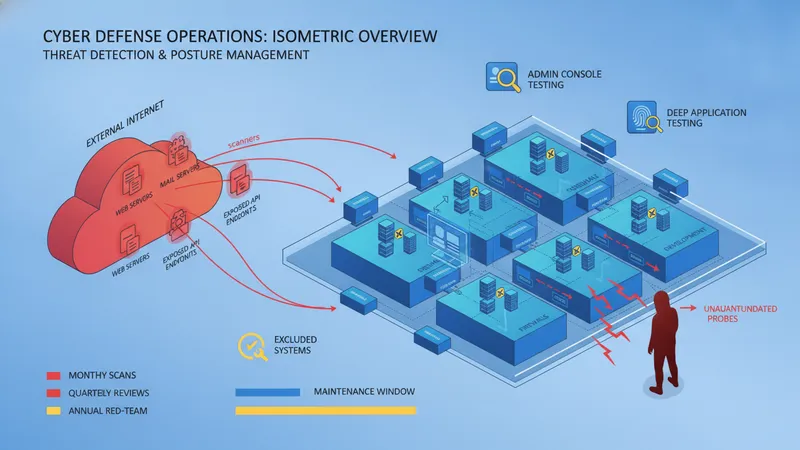
Organisations often balance breadth and depth when defining scope. Broad, periodic scans may reveal surface-level misconfigurations across many assets, whereas targeted, deeper engagements can validate protocol handling, business logic flaws or environment-specific issues. Some programmes apply tiered scopes: lightweight scanning monthly, deeper application reviews quarterly and comprehensive red-team exercises annually. The chosen pattern typically reflects risk tolerance, regulatory commitments and available resources rather than a universal standard.
Legal and contractual elements are commonly part of scoping decisions. Written rules of engagement, explicit authorisation, point-of-contact details and escalation procedures help protect both the assessor and the assessed entity. Where cloud or third-party hosted components are involved, permissions from service providers or tenancy owners may be necessary. Organisations frequently document these administrative controls before technical testing begins so that responsibility and liability are clearer for all parties.
Insider considerations often include how to treat sensitive data and production systems during tests. Many organisations opt to use test or staging environments for high-risk exploit techniques, or apply controls such as rate limits and monitoring to reduce service disruption. Independently conducted testing may also be aligned with compliance checklists when required by regulators or contractual frameworks, and the scope can be adjusted to capture specific controls that matter for audit evidence.