
Indoor Air Quality Sensor: Key Metrics Measured And What They May Indicate

Interpreting data, connectivity, and maintenance for Indoor Air Quality Sensor
Data management choices influence the usefulness of sensor outputs. Devices that log time-stamped data facilitate trend analysis and correlation with activities or environmental events. Connectivity options range from local storage to networked cloud services; each has trade-offs for accessibility, privacy, and long-term archiving. When exporting data for analysis, retaining raw values alongside any processed indices supports transparency. Analysts often apply simple descriptive statistics, moving averages, or event markers to better distinguish transient spikes from sustained conditions, acknowledging the limits of each sensor’s precision and accuracy.
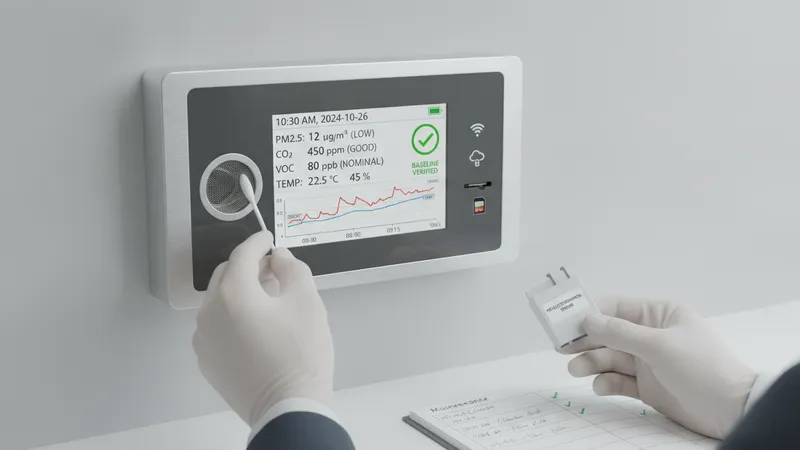
Maintenance routines typically include periodic checks, cleaning, and component replacement according to manufacturer guidance or observed performance changes. Optical inlets may require gentle cleaning to avoid altered optical paths; electrochemical and PID elements may have finite service lives and specified replacement intervals. Maintaining a log of maintenance actions helps identify whether changes in readings stem from environmental shifts or equipment servicing. Regular verification of baseline behavior after maintenance can help confirm that the sensor continues to operate within expected response characteristics.
Integration with building systems can expand context but also requires careful configuration. Networked sensors may feed building management systems or data dashboards that aggregate multiple inputs; consistent calibration and synchronized timestamps aid in correlating signals. Privacy considerations arise when occupancy-related metrics are combined with identifiable usage data; anonymization and limited data retention are common mitigations. Interoperability standards and open data formats may ease long-term analysis and reduce vendor lock-in concerns when selecting systems for monitoring and research purposes.
Interpreting results benefits from a cautious, evidence-based approach. Sensor outputs commonly serve as indicators that prompt further investigation or more detailed sampling rather than as conclusive proof of specific causes. Cross-referencing multiple parameters, documenting contextual factors, and using reference comparisons are practices that often improve confidence in interpretation. Over time, consistent measurement protocols and careful maintenance typically yield datasets that are more useful for trend analysis and decision support in built environments.