
Industrial Pallet Racking: Key Types, Configurations, And Applications

Load capacity, rack dimensions, and forklift compatibility within pallet racking
Rated capacities for racking components are typically specified by manufacturers or structural engineers and often expressed as load per beam level or per pallet position. These ratings depend on beam span, section size, and connection details. In practice, loads can range widely; a facility may encounter small-pallet loads of a few hundred kilograms per position or heavy industrial pallets that reach multiple tonnes. Planners commonly consult structural engineers when column loads, multi-level racks, or mezzanine integrations approach building or floor limits to ensure safe design margins.
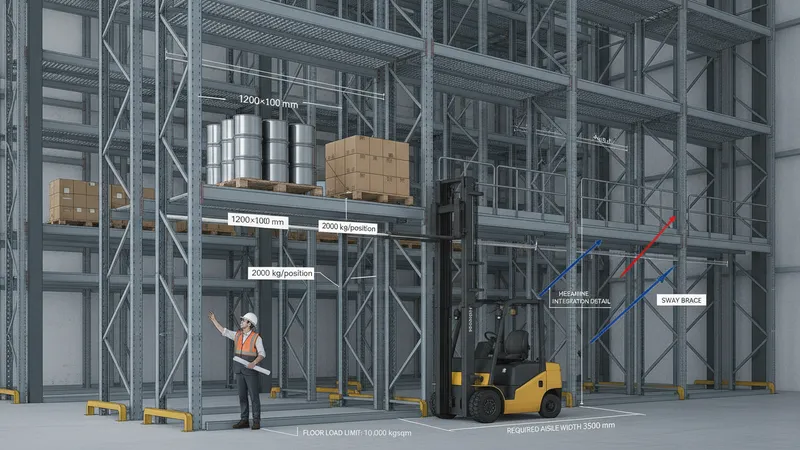
Rack dimensions respond to pallet footprints and handling clearances. Common pallet footprints such as 1,200 × 1,000 mm or 1,200 × 800 mm influence bay widths and beam spans, and beam levels are typically spaced to accommodate load height plus handling clearance. Forklift mast heights and fork carriage capacities determine maximum safe lift levels and required aisle width. When taller racks are proposed, consideration is often given to reduced effective beam capacity due to increased eccentric loading and sway, which can affect permissible load limits.
Compatibility with forklifts and other handling equipment is critical. Reach trucks, counterbalanced trucks, order pickers, and turret trucks each have different operational envelopes that affect aisle width, lift heights, and fork reach. For example, narrow-aisle reach trucks can allow narrower aisles but usually require level, well-maintained floors. When integrating automated guided vehicles or AS/RS cranes, rack interfaces such as pallet entry points, conveyors, and safety interlocks may be required. Coordination between rack design and equipment specification often reduces retrofit complications.
Maintenance and operational practices influence long-term load performance. Regular inspections for beam deformation, upright damage, and loose connections can identify issues before they reduce capacity. Column protectors and clear marking of load limits may reduce impact damage and mis-loading. Operational training that emphasises correct pallet placement, even weight distribution, and adherence to rated capacities often contributes to more consistent performance and fewer unplanned outages.