
Laser Eye Surgery: Understanding Procedures, Techniques, And Common Outcomes

Eligibility, pre-procedure assessments, and patient considerations
Eligibility assessment begins with a comprehensive ophthalmic history and objective testing. Stable refractive error over a period—often documented over 12 months—is typically considered an indicator of refractive stability, although acceptable intervals can vary by clinician. Key diagnostic tests include manifest and cycloplegic refraction, corneal topography/tomography, pachymetry for corneal thickness, and slit-lamp examination to assess ocular surface and lens clarity. These data help identify contraindications such as progressive corneal ectatic disease.
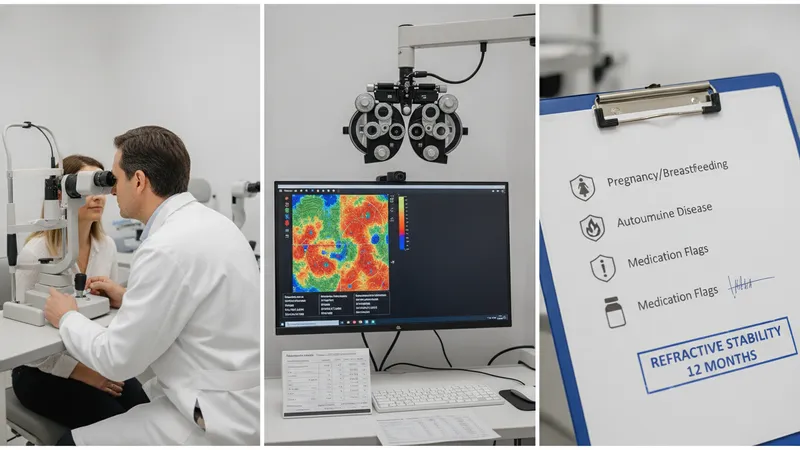
Systemic and ocular health factors may influence candidacy. Conditions that affect wound healing, such as certain autoimmune diseases, or medications that alter healing responses, may be relevant. Pregnancy and breastfeeding commonly prompt deferral of elective refractive procedures due to hormonal changes that can affect refractive stability. Age considerations typically aim to ensure ocular maturity and, in older patients, to evaluate lens status given the potential coexistence of presbyopia or cataract that may influence overall visual outcomes.
Tear film and ocular surface health are frequently assessed because postoperative dry eye symptoms can be a common transient effect. Tests may include osmolarity, tear breakup time, and assessment of meibomian gland function. If significant surface disease is present, clinicians often address these issues prior to proceeding, as optimizing the tear film can improve diagnostic measurement reliability and may influence postoperative comfort and visual quality. Patient lifestyle factors, such as occupational visual demands, are also part of the discussion as considerations rather than directives.
Informed consent and expectation management are components of pre-procedure care. Discussions typically cover the range of likely visual changes, potential transient effects like glare and fluctuations, and the possibility of needing enhancements. Measurements are often repeated to confirm stability, and alternative approaches may be considered if diagnostic data suggest elevated risk. These preparatory steps aim to align clinical decisions with an individual’s ocular characteristics and objectives while acknowledging that outcomes have inherent variability.