
Lead Management System: How It Organizes And Tracks Prospective Customers

Organizing and tracking: system types and configurations related to prospective customer management
Different system types support organizing and tracking prospective customers in varying ways. Cloud-based CRMs typically offer multi-user access, role-based permissions, and continuous updates from vendors. On-premises installations may provide more direct control over data residency but often require larger IT maintenance effort. Hybrid configurations can use cloud services for front-end capture while storing certain sensitive fields in controlled databases. Teams often weigh configuration complexity against the need for customization and integration with existing back-office systems.
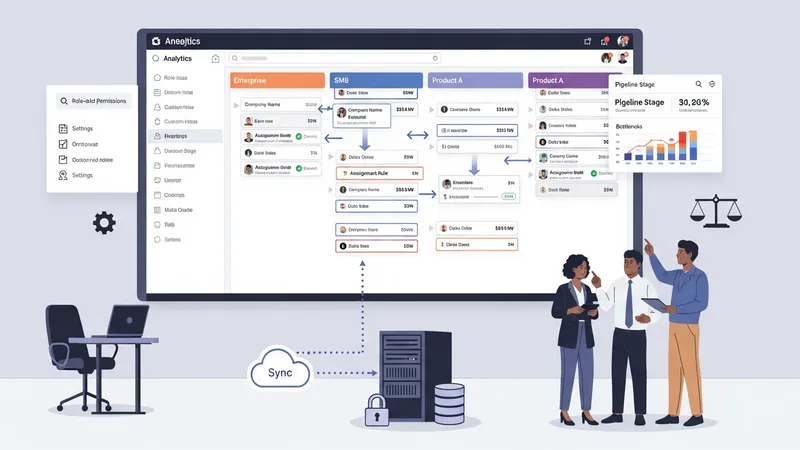
Configuration choices commonly include the number of pipeline stages, custom fields to reflect product or service specifics, and assignment rules for routing leads to sales owners. Multi-pipeline setups may be used when different product lines or customer segments require distinct progression stages. Simpler configurations with fewer stages can reduce administrative overhead, while more granular stage definitions can provide finer insights into bottlenecks, at the cost of increased maintenance.
Scalability considerations often guide system type selection. Teams expecting significant lead volume may prioritize platforms that can handle high event throughput and complex automation, while smaller groups may prefer lightweight tools that minimize training. Integration capacity is another factor: platforms that offer APIs and prebuilt connectors enable automated syncing with marketing tools, support systems, and analytics platforms, which can reduce duplicated work and improve data consistency across functions.
Operational considerations include user training, governance of custom fields, and documentation of process rules. Systems that allow citizen configuration often encourage experimentation but require guardrails to avoid field proliferation and inconsistent naming. Establishing a small governance group to review changes and to align naming conventions can help maintain data usability without overly constraining iterative improvements.