
Lutetium PSMA: Potential Benefits, Risks, And Safety Considerations

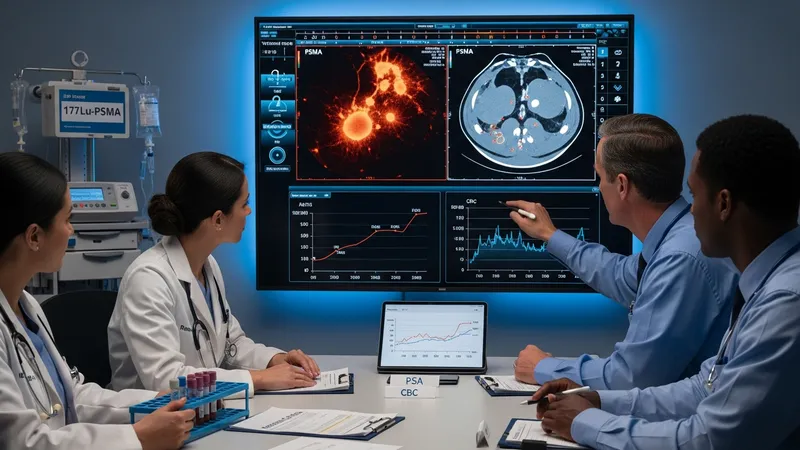
Follow-up assessment and outcome monitoring for Lutetium PSMA: Potential Benefits, Risks, and Safety Considerations
Follow-up frameworks in publications combine laboratory surveillance, symptom assessment, and interval imaging. Serial measurements of disease-related biomarkers and complete blood counts are commonly reported at defined intervals to detect hematologic effects and biochemical trends. Imaging schedules vary; some protocols assess response after a fixed number of cycles while others tailor imaging to clinical changes. Reports highlight that imaging interpretations may be influenced by timing relative to treatment and possible inflammatory or reparative changes in lesions.
Outcome assessment descriptions often reference both biochemical and radiographic endpoints. Biochemical markers such as prostate-specific antigen (PSA) are used with caution because changes may lag or vary relative to imaging findings. Radiographic response assessment using PSMA PET or conventional modalities is typically contextualized within clinical status, with multidisciplinary review recommended in reports to reconcile discordant findings. Authors note that standardized response criteria continue to evolve and that comparisons across studies require attention to differing assessment methods.
Data collection and participation in registries or trials are frequently described as important for refining understanding of durability of response and late effects. Observational cohorts and trial follow-ups contribute longitudinal information on patterns of benefit and toxicity, and publications often encourage consistent reporting standards to aid data aggregation. These recommendations are framed as measures to improve evidence quality over time rather than as immediate predictions about individual outcomes.
Multidisciplinary follow-up, including oncology, nuclear medicine, radiation safety, and supportive care teams, is commonly emphasized in the literature as a component of structured post-treatment care. Discussions present multidisciplinary coordination as a means to integrate laboratory monitoring, symptom management, and imaging interpretation. The overall tone in follow-up descriptions is cautious and practical: monitoring strategies may evolve as additional data accumulate, and individualized plans are typically developed in the context of institutional protocols and patient-specific considerations.