
Machine Learning Courses: Key Topics, Skills, And Learning Outcomes

Curriculum Components and Core Topics related to Machine Learning Courses: Key Topics, Skills, and Learning Outcomes
Typical curriculum components address foundational mathematics, probability and statistics, algorithmic principles, and data-centric skills. Foundational modules may cover linear algebra concepts such as matrix operations, eigenvectors, and singular value decomposition because these appear in dimensionality reduction and model parameterizations. Probability and statistics sections often introduce distributions, hypothesis testing, and estimation techniques that underpin probabilistic models. Coursework may present optimization concepts—gradient descent variants and regularization methods—since many learning algorithms are trained by optimizing objective functions.
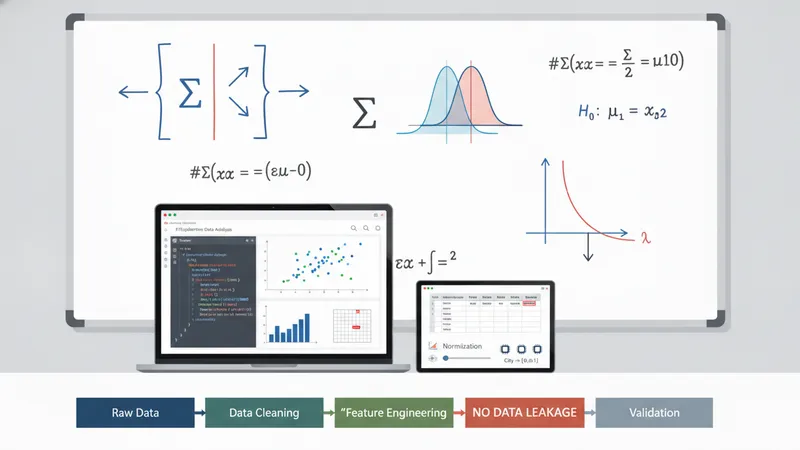
Data preparation segments usually teach practical workflows for cleaning, transforming, and documenting datasets. Topics can include handling missing or inconsistent values, normalizing or scaling features, and encoding categorical variables. Instruction frequently emphasizes exploratory data analysis using visualizations and summary statistics to identify patterns or anomalies that affect modeling choices. Students may learn to use pipelines that capture preprocessing steps for reproducibility and to avoid leakage between training and validation sets when estimating performance.
Modeling modules commonly compare families of algorithms and their typical use cases. Linear and logistic regression often introduce baseline approaches, while tree-based models and ensembles are presented for flexible nonparametric modeling. Neural network sections may describe architectures for structured data, sequences, or images and explain concepts such as activation functions and backpropagation at a conceptual level. Courses may also address model selection techniques, hyperparameter search strategies, and considerations for interpretability versus predictive capacity.
Ethical and practical considerations sometimes appear as dedicated topics or integrated discussions, covering dataset bias, fairness measures, and the importance of transparent reporting. Training may note that models can perpetuate existing biases in data and that evaluation across subgroups may be necessary to surface disparities. Documentation practices—data provenance, versioning, and experiment tracking—are often introduced as ways to maintain accountability and support reproducible workflows. These considerations help frame technical skills within broader responsible practice.