
MDR Cybersecurity: How Managed Detection And Response Works In Modern Networks

MDR: Telemetry Sources and Endpoint Visibility
Telemetry sources form the foundation of how MDR services identify potential compromise. Common sources include endpoint agents, network flow records, DNS logs, cloud platform logs, and identity provider events. Each source contributes distinct signal types: endpoints show process and file activity, network logs indicate lateral movement or data exfiltration patterns, and identity logs reveal authentication anomalies. Combining these signals often allows analysts to correlate an initial foothold with subsequent reconnaissance or lateral movement, which may be harder to detect when sources are evaluated in isolation.
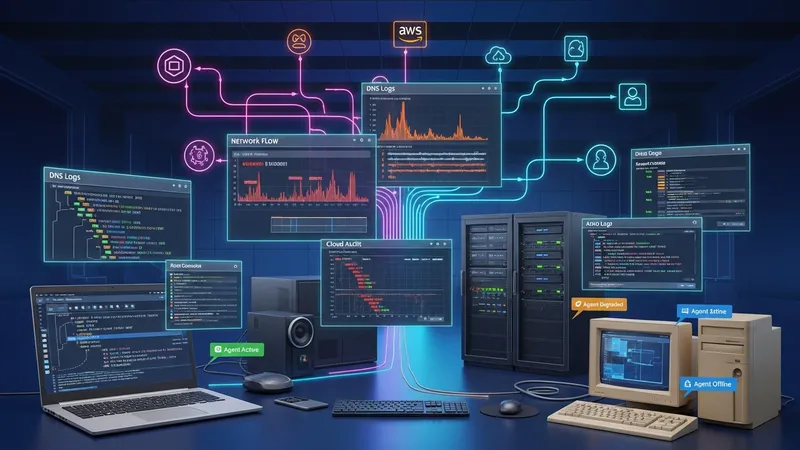
Endpoint coverage is frequently a priority because many attacks begin on user devices. Agents that capture process trees, command lines, loaded modules, and file creation events may enable detailed reconstruction of attacker activity. However, agent deployment across diverse operating systems and legacy systems can be challenging, and gaps in coverage may limit investigative depth. Organisations often evaluate telemetry completeness alongside agent performance impacts, balancing visibility needs against potential operational constraints on managed devices.
Network and cloud telemetry often supplement endpoint data and may reveal activities that endpoints do not capture, such as suspicious external connections or unusual API calls. For cloud-native workloads, audit logs and platform-native telemetry can provide evidence of lateral access or misused credentials. In mixed environments, correlating identity and cloud logs with endpoint events can clarify whether an anomalous process correlates with a compromised account or a misconfigured service, aiding in accurate triage and response planning.
Coverage decisions also influence privacy and data management considerations. Detailed telemetry can include sensitive information, so organisations and service providers commonly apply collection policies, retention limits, and redaction rules to align monitoring with legal and privacy requirements. Designing telemetry collection and storage with data minimisation and role-based access reduces exposure while preserving the investigative value analysts need to validate and contain incidents.