
NCCN Non-Small Cell Lung Cancer: Overview Of Guideline-Based Care Pathways

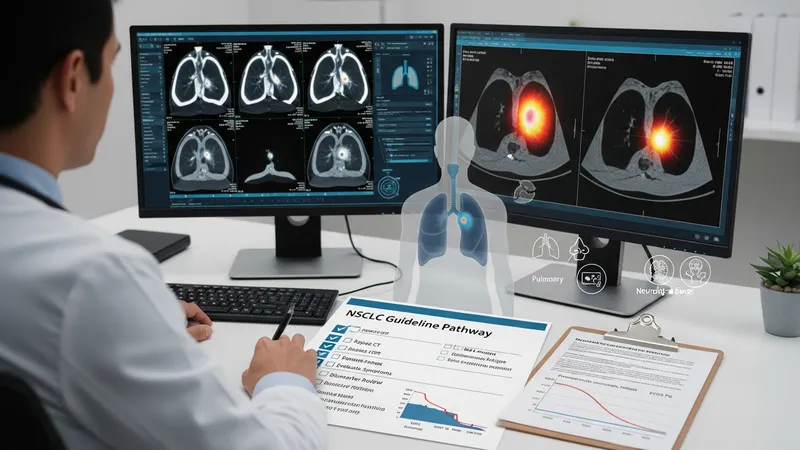
Response evaluation, surveillance, and follow-up in NSCLC guideline pathways
Guideline-based pathway content on response evaluation commonly describes standardized intervals and criteria for radiographic assessment following therapy. Imaging modalities and timing may be outlined for post-treatment evaluation, and response criteria—such as commonly referenced radiographic response definitions—are often summarized to provide a consistent framework for assessing tumor control. The pathways typically emphasize that response assessment should be coordinated with clinical symptoms and, where relevant, biomarker trends, recognizing that radiologic changes may lag or be difficult to interpret in certain contexts.
Surveillance recommendations in pathways usually present reasonable timeframes for follow-up visits and imaging after definitive therapy, balancing the potential benefits of earlier detection of recurrence with the risks of overtesting. For example, routine chest imaging at defined intervals may be described as a commonly used approach, with the acknowledgement that exact frequency and modality can be individualized. Pathways also often include suggestions for monitoring late effects of treatment, such as pulmonary or neurologic symptoms after radiation or surgery, and recommend documentation of functional status over time.
Follow-up planning sections may address when to consider additional diagnostic evaluation for suspected recurrence, including tissue confirmation when clinically actionable change is anticipated. The pathways often discuss the role of salvage therapies and how prior treatments influence subsequent options. Emphasis is placed on multidisciplinary reassessment at the time of progression to consider available systemic and local interventions, always noting that choices depend on prior therapies, patient factors, and evolving evidence.
Practical considerations highlighted in these sections include coordination of long-term care between oncology specialists and primary care, documentation of survivorship issues, and the potential psychological and social support needs of patients. Pathways typically present these aspects as part of comprehensive care planning, encouraging structured follow-up approaches that can be adapted to individual circumstances and healthcare system resources.