
Payroll Software Companies: Key Features, Capabilities, And Use Cases

Vendors that provide payroll management systems develop software to automate worker compensation processes, reduce manual calculation, and centralize payroll records. These systems typically handle wage calculation, statutory deductions, employer taxes, and payment distribution while maintaining ledgers and employee records. The concept centers on moving routine payroll tasks from spreadsheets and manual entries into structured workflows that can be audited and reported.
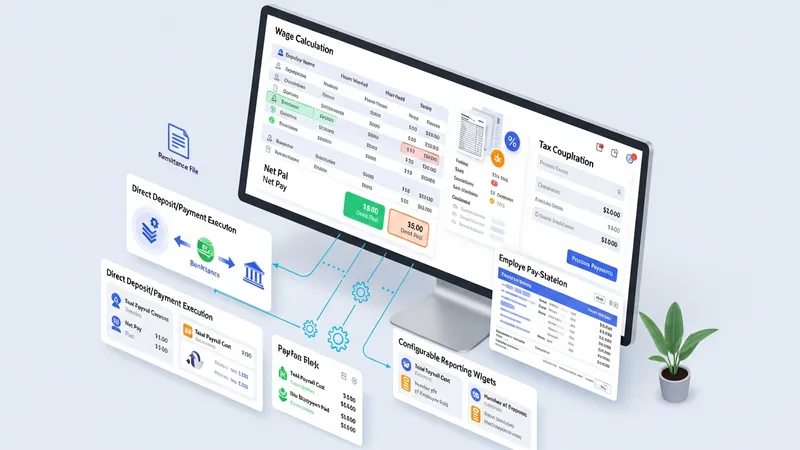
Such providers often package a set of capabilities in modular form: core payroll calculation engines, tax computation and filing modules, payment execution (direct deposit or remittance files), and employee-facing pay statements. Many solutions also offer optional modules for leave management, benefits withholding, time-tracking integration, and configurable reporting. The emphasis is on consistent, repeatable processing and traceable records rather than bespoke manual routines.
- Gusto — cloud-based payroll and HR administration with payroll processing, tax filings, and employee self-service features often used by small to medium organizations.
- ADP — a provider with scalable payroll and workforce management platforms that may include tax services, multi-country support for larger organizations, and reporting suites.
- QuickBooks Payroll — integrates with accounting software and typically offers automated pay runs, tax calculations, and direct deposit options intended for smaller accounting-centric operations.
Feature coverage among vendors may vary: some systems focus primarily on automated pay calculation while others bundle benefits administration, HR onboarding, and timekeeping. Integration capabilities often determine how well a payroll provider fits with existing accounting, time-tracking, and human-resources systems. Pricing structures commonly reflect per-employee or per-pay-period billing and may include platform fees; organizations typically evaluate recurring cost relative to expected administrative time savings.
Tax calculation and filing support is a frequent differentiator. Many providers offer automated withholdings and remit services that may handle local and national tax obligations according to published regulatory schedules. For organizations operating across jurisdictions, tax logic may need configuration or supplemental local filings. Vendors often supply compliance documentation and electronic filing options that can reduce manual forms and paperwork, though final responsibility for legal compliance typically remains with the employer.
Integration with time-tracking and attendance systems may be offered via native connectors, third-party integrations, or APIs. Automated transfer of hours, overtime, and leave balances into payroll calculations can reduce reconciliation work and manual errors. Timekeeping integration may also support varied pay rules for different employee types, such as salaried, hourly, or contractors, and can affect overtime calculations and benefits accruals depending on configured policies.
Reporting, audit trail, and data retention capabilities often determine how useful a payroll system is for finance and HR teams. Systems typically provide payroll registers, tax liability summaries, and tax filing confirmations. Secure storage of historical pay records and the ability to generate customized reports may support internal audits and year-end processes. Data export options frequently exist to feed accounting systems or to satisfy statutory recordkeeping requirements.
In summary, payroll management vendors supply a mix of automated processing, tax handling, payment execution, integrations, and reporting that together aim to streamline compensation workflows and recordkeeping. The next sections examine practical components and considerations in more detail.