
Tech Tools For Business: Understanding Digital Solutions For Modern Operations

Types of Digital Solutions for Modern Operations
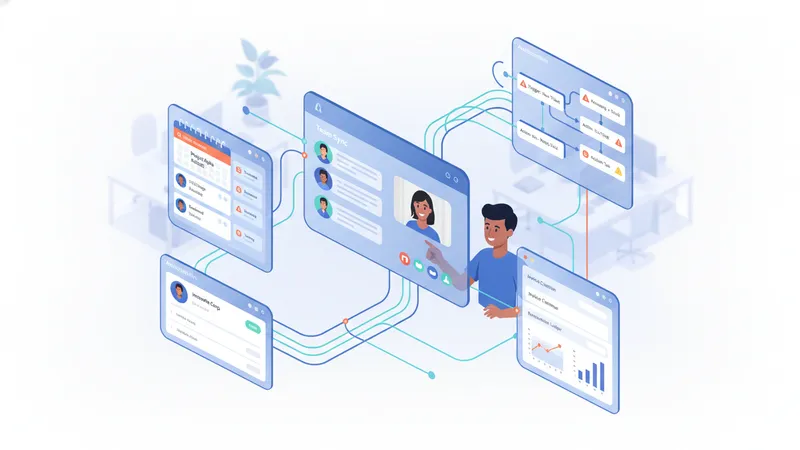
Communication platforms often serve as the central hub for team interaction and may include instant messaging, presence indicators, and video conferencing. These platforms typically provide integrations with calendar systems and project tools, which can reduce context switching. Project and task management systems focus on defining work items, assigning ownership, and tracking progress across stages or boards. CRM systems capture customer records and interactions to support sales and service processes. Accounting and finance tools handle invoicing, reconciliation, and basic reporting. Each category may include many role-specific features and is often chosen to align with operational needs rather than marketing claims.
Automation and workflow tools may connect the categories above by triggering actions across systems—for example, creating an invoice when a deal stage advances or notifying a team channel when a task is overdue. These automation layers can be lightweight rule engines within a single tool or more sophisticated platforms that orchestrate multi-step processes. They often include conditional logic, retry rules, and error handling patterns. When used judiciously, automation can reduce repetitive work; however, complexity growth is a common operational consideration.
Cloud computing and storage solutions frequently underpin the listed categories by providing hosting, scalability, and data persistence. Cloud platforms commonly offer managed databases, object storage, and compute resources that tools leverage to operate without local infrastructure. For many organizations, cloud-based delivery may simplify provisioning and scaling, yet it may also affect data residency and integration latency considerations. Understanding the underlying hosting model may inform decisions around backup, failover, and service-level expectations.
Analytics and reporting tools often consume data from communication, task, CRM, and finance systems to produce consolidated views. These tools may connect via APIs, data warehouses, or CSV exports. Typical reporting use cases include monitoring operational KPIs, tracking financial cycles, and supporting customer analytics. Data quality, field consistency, and update cadence are key factors that influence the reliability of outputs. Planning for data integration and standardizing field definitions often reduces downstream reconciliation work.