
Wastewater Recycling: Key Processes And Treatment Stages Explained

Wastewater Recycling: Collection, Screening and Primary Treatment
Collection systems and initial mechanical operations form the foundation for subsequent treatment performance. Gravity sewers, pumping stations and preliminary screening equipment concentrate and direct influent to the treatment plant. Screens may be coarse or fine and are often accompanied by grit removal devices that protect pumps and prevent abrasion. Flow equalization or buffering tanks can be used to attenuate short-term peaks in flow and organic loading, which typically improves the stability of downstream biological units. Considerations at this stage include ease of access for routine maintenance and the potential for odors or vector issues at lift stations.
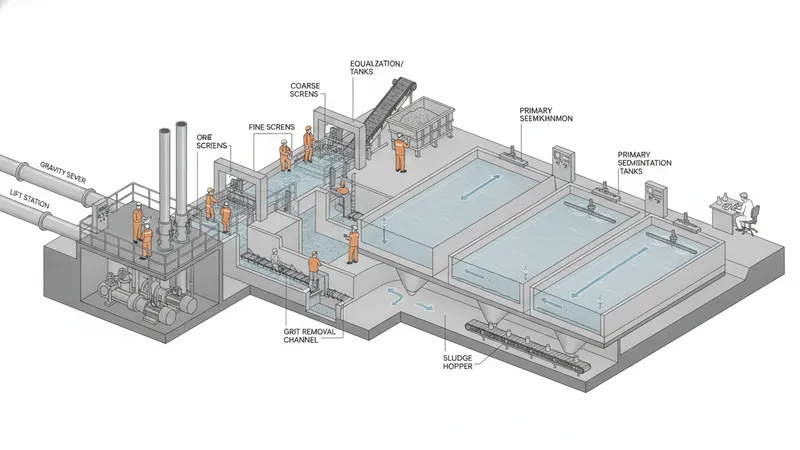
Primary treatment commonly involves sedimentation basins where settleable solids are removed by gravity. The extent of primary removal influences downstream loads: extensive primary settling can lower solids and reduce organic load to biological systems but may increase the organic content remaining in sludge. Detention time and basin geometry are design variables that may be adjusted to local influent characteristics. Operators often monitor settled solids and scum removal efficiency as part of routine checks to maintain consistent primary removal performance.
Operational tips for front-end processes often emphasize maintenance frequency and simple instrumentation. Regular raking or mechanical cleaning of screens reduces blockages and the risk of bypass events. Grit chambers usually require periodic removal of accumulated grit to preserve hydraulic capacity. Designers commonly allow for redundant screening trains to enable servicing without interrupting influent flow. These considerations can help sustain reliability, especially in systems subject to variable industrial discharges or storm inflow.
Planning for collection and primary stages should anticipate the interface with sludge handling. Sludge captured in screening and primary basins will require transport, thickening, and stabilization. Integrating grit separation and primary solids handling with sludge lines may reduce transfer costs and simplify operational sequencing. Early-stage decisions therefore influence the volume and character of solids managed in later stages, and designers often model these flows to inform equipment sizing and polymer dosing strategies for dewatering.