
Home Automation: How Connected Devices Transform Everyday Living

Home automation refers to coordinating household devices and systems so they communicate and operate with little manual intervention. Connected devices use local networks, cloud services, or direct wireless connections to exchange state information and execute scheduled or triggered actions. Typical configurations allow lights, heating and cooling systems, door locks, cameras, sensors, and appliances to be monitored and adjusted through a unified interface or automated rules. The overall concept centers on interoperability and information flow: sensors report conditions, controllers decide or schedule actions, and actuators change device states to reflect those decisions.
Connected devices can transform daily routines by enabling context-aware responses and remote visibility. For example, occupancy sensors may inform heating setpoints, or lighting scenes can adapt to time of day and activity. These changes can affect convenience, perceived safety, and energy use without requiring constant direct user input. Implementation patterns vary: some systems emphasize local control and privacy, while others rely on cloud connectivity for remote access, analytics, or voice integration. Each approach has trade-offs in latency, reliability, and data exposure that stakeholders often weigh.
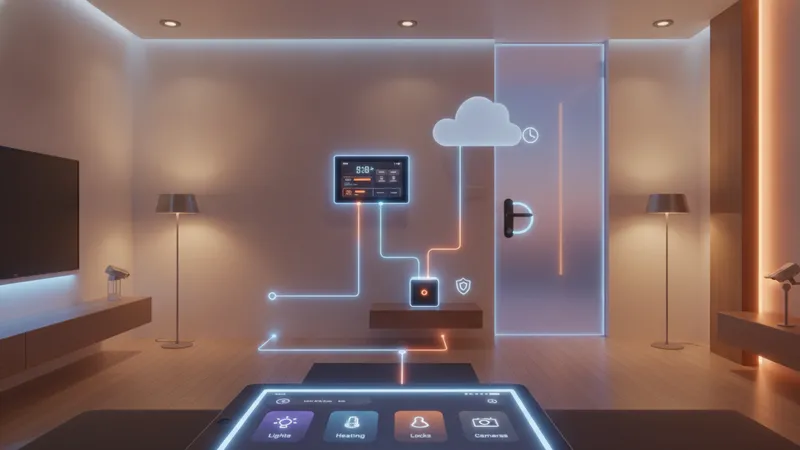
- Smart lighting: networked bulbs, switches, and dimmers that can be scheduled, grouped, or set by scene; often support local or cloud control.
- Smart thermostats and climate control: devices that adjust setpoints based on schedules, sensors, or remote commands and may integrate with weather data.
- Smart security systems: door locks, cameras, alarm hubs, and sensors that report events and may allow remote status checks or alerts.
- Voice and app-based controls: interfaces for direct control and automation management using mobile apps or voice assistants.
- Sensors and motion detection: presence, door/window, temperature, humidity, and leak detectors that provide context for automated actions.
- Hubs and connectivity layers: local controllers or protocol bridges (e.g., Zigbee, Z-Wave, Thread, Wi‑Fi) that coordinate device communication.
- Automated appliances and energy management: connected washers, ovens, and home energy monitors that enable scheduling and load awareness.
Comparing control models helps clarify how devices transform everyday living. A locally focused system may keep data within a home network and can operate when internet access is interrupted; a cloud-centric model typically enables broader remote access and vendor-provided services such as routine updates or aggregated analytics. Hybrid deployments combine both approaches, where time-sensitive automation runs locally and less critical features use cloud services. Users and designers may consider responsiveness, privacy preferences, and the likelihood of software updates when choosing an architecture for an automated home.
Automation logic commonly follows event-driven, schedule-driven, or condition-driven patterns. Event-driven rules run when sensors or user actions produce triggers, schedule-driven rules execute at set times or intervals, and condition-driven logic evaluates multiple inputs before acting. These frameworks may be implemented in device firmware, a local hub, or a cloud service and can often be composed into layered behaviors—for example, a lighting scene that only activates on motion if ambient light is below a set threshold. Understanding these patterns can simplify planning and troubleshooting.
Energy management and appliance automation illustrate typical practical outcomes without promising uniform results. In many cases, optimizing thermostats, scheduling high-consumption appliances during favorable tariffs, and using smart plugs for standby loads can reduce energy waste. The actual impact depends on building fabric, occupant behavior, and local utility pricing. Automated scheduling often aims to align comfort preferences with efficiency goals, and monitoring hardware may supply data that supports incremental adjustments rather than immediate, guaranteed savings.
Privacy and security considerations influence how connected devices are deployed and maintained. Devices may collect logs, video, or usage metadata that could be shared with vendors or third-party services unless configured otherwise. Local control and encrypted communication channels can reduce exposure, while strong account management practices and firmware updates can mitigate common vulnerabilities. Planning for secure onboarding, network segmentation, and periodic review of device permissions typically forms part of a prudent installation strategy.
In summary, integrating connected devices into a residence generally shifts repetitive tasks toward automated routines, increases remote visibility of systems, and alters how occupants interact with their environment. Outcomes depend on choices about device types, control models, and privacy trade-offs, and may vary across households. The next sections examine practical components and considerations in more detail.