
Costco Auto Dealers: Vehicle Brands Commonly Available Through Participating Dealerships

A retailer-sponsored auto purchasing program commonly pairs a national membership organization with a network of participating franchised and independent dealerships. The concept centers on creating a defined channel through which members can view and select from an assortment of new and pre-owned vehicles that dealers make available under a consistent process. Participating dealerships often agree to specific paperwork steps, disclosed fees, and a set of vehicle types to improve predictability for members while remaining independent in their inventory and sales operations.
Dealership participation typically spans a range of mainstream domestic and import manufacturers, luxury marques, and increasing numbers of electrified models. Inventory visible through the program may include dealer-new units, manufacturer-certified pre-owned cars, and standard used vehicles. Availability frequently depends on regional dealer stocking, production cycles for particular models, and the presence of certified programs tied to each brand. Membership-based programs do not change factory warranties, but they may standardize how dealers present vehicle options and documentation.
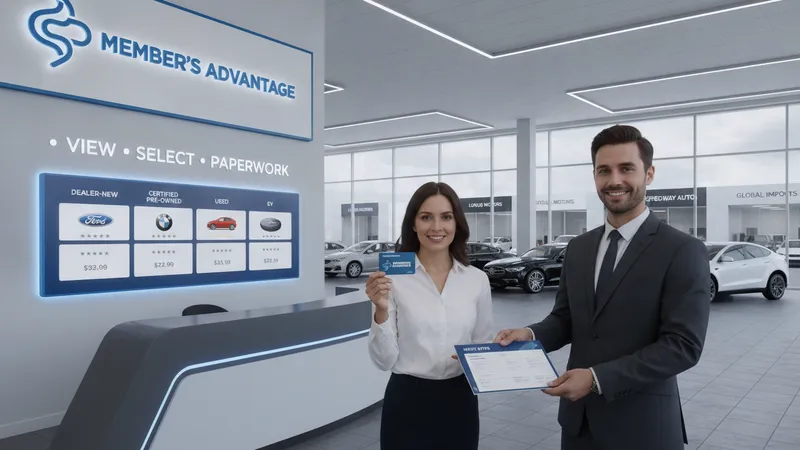
- Mainstream domestic brands — examples often include Ford, Chevrolet, and Ram, typically represented across franchised dealer networks with broad model coverage including trucks and SUVs.
- Mainstream import brands — examples commonly include Toyota, Honda, and Nissan, which often have strong representation for passenger cars, crossovers, and hybrid variants.
- Luxury and premium brands — examples such as BMW, Mercedes-Benz, and Lexus are frequently offered through participating luxury franchise dealers, often including certified pre-owned options.
- Electric and hybrid vehicles — examples include battery-electric models from multiple manufacturers and hybrid variants such as plug-in models or traditional hybrids from established brands.
Participating dealerships may list vehicles subject to typical market influences such as regional demand, model year changes, and supply chain conditions. For new vehicles, dealerships usually display standard trims and factory-installed options; for used inventory, certified pre-owned (CPO) programs can add inspection and limited warranty features that vary by manufacturer. Members using these programs can often expect visibility into a curated set of vehicles from several brand families, though exact makes and models available may shift weekly as dealers rotate stock.
Vehicle categories available through participating dealers often reflect consumer demand patterns: compact passenger cars, midsize and full-size SUVs, light-duty and heavy-duty pickup trucks, and vans for cargo or passenger use. Luxury sedans and premium SUVs are typically present in regions with authorized luxury franchise dealers. Electrified powertrains — battery-electric, plug-in hybrid, and conventional hybrid systems — are increasingly included, but availability for specific electric models may depend on local charging infrastructure and manufacturer production allocations.
Pricing approaches within the program can vary. Dealers may present manufacturer suggested retail prices (MSRP), prearranged program pricing that aims to streamline comparison, and separate pricing for certified pre-owned versus standard used vehicles. Typical pricing ranges depend on brand, model, and equipment; for example, compact cars may often be positioned at lower entry ranges while luxury or large pickup models trend toward higher ranges. Financing, leasing, and warranty add-ons remain dealer-specific and are not standardized across all participating locations.
When assessing brand presence across participating dealers, it is common to see large national manufacturers represented at many locations, while certain import and luxury brands may appear less frequently depending on regional franchise coverage. Inventory turnover rates for popular models may be faster, which can affect the variety visible in the program on any given day. Dealers may highlight certified pre-owned inventory that underwent manufacturer-approved inspections; such vehicles often come with documented service history and limited warranty terms defined by the manufacturer.
In summary, a membership-linked auto program that partners with participating dealerships generally offers a cross-section of domestic, import, luxury, and electrified models through dealer networks that maintain their own inventories and sales practices. Availability and pricing typically vary with regional stock, model cycles, and manufacturer-certified programs. The next sections examine practical components and considerations in more detail.