
Oncology Research And Treatment: Understanding Core Concepts And Care Pathways

Oncology research and treatment involves the study of cancer biology, methods for detecting and characterizing tumors, and the organisation of care pathways that move a patient from diagnosis through treatment and follow-up. This field combines laboratory science, clinical investigation, diagnostic imaging and pathology, and health services planning to understand how cancers develop, how they respond to different interventions, and how care can be coordinated across providers. The focus is on generating evidence about disease mechanisms, testing interventions in structured studies, and structuring care pathways so that diagnostic and therapeutic steps are coherent and measurable.
Key domains within oncology research and treatment include molecular and cellular investigations, clinical trials and observational studies, diagnostic and staging processes, and systems for coordinating multidisciplinary care. Each domain contributes distinct types of data and decision points: laboratory assays generate biological hypotheses, diagnostic procedures establish disease extent, trials evaluate safety and efficacy, and care pathways address logistics, supportive services, and transitions between settings. Taken together, these areas form an evidence ecosystem that may inform clinical practice, guideline development, and health system planning without implying specific outcomes for individual patients.
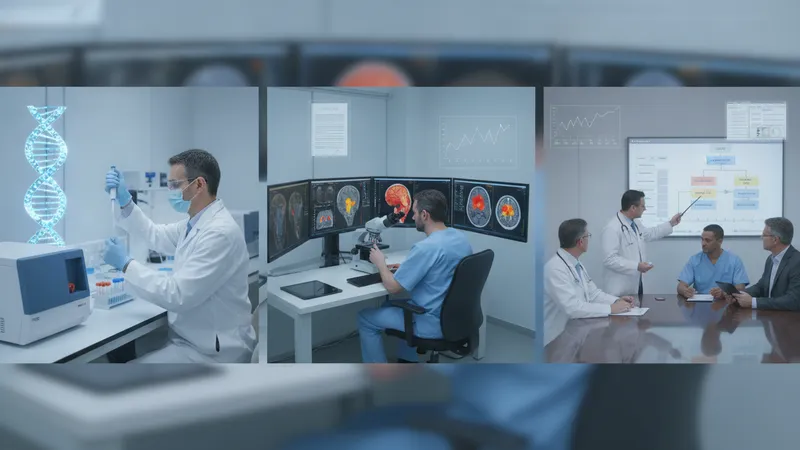
- Molecular and cellular research methods — laboratory assays, genomic profiling, and preclinical models that explore mechanisms of tumour growth and treatment response.
- Clinical trial phases and study design — structured protocols (phase I–IV) and observational studies that assess safety, dosing, efficacy signals, and longer-term outcomes.
- Care coordination and supportive services — navigation, symptom management, rehabilitation, and psychosocial support integrated into clinical pathways to address patient needs across settings.
Comparisons among research approaches may clarify strengths and limitations rather than declare superiority. For example, preclinical models such as cell lines and animal studies can offer mechanistic insight but typically do not predict clinical outcomes with certainty; translational studies bridge those models to human biology. Observational cohort studies may identify associations and real-world patterns but often require cautious interpretation because of potential confounding. Randomised controlled trials (RCTs) usually provide more direct evidence about causal relationships between interventions and outcomes, while remaining subject to design constraints such as population selection and follow-up duration.
Frameworks for diagnostic and staging processes often combine imaging, pathology, and biomarker assays to characterise tumour type and extent. Diagnostic imaging modalities (e.g., ultrasound, CT, MRI, PET) can assess anatomic and metabolic features, whereas pathology establishes histologic subtype and grade. Molecular profiling may provide additional information about genetic alterations and expression patterns that can inform trial eligibility or targeted approaches. These components typically feed into staging classifications that guide treatment planning and prognostic discussions, recognising that staging systems and available assays evolve over time.
Clinical trial phases and design elements serve distinct roles in evidence generation. Phase I studies typically evaluate safety and dose-ranging, phase II studies explore preliminary activity or signal detection, and phase III trials compare interventions against standard approaches to evaluate efficacy and relative risks. Adaptive and basket trial designs may allow evaluation across multiple tumour types or biomarker-defined groups, often aiming for efficiency in assessing targeted hypotheses. Trials may be complemented by registries and real-world evidence sources that capture broader patient experiences and longer-term outcomes beyond trial confines.
Care coordination and supportive services address non-biological factors that affect patient experience and treatment delivery. Navigation programmes, multidisciplinary tumour boards, symptom-management clinics, and rehabilitation services can help align diagnostic results with treatment plans and follow-up schedules. Supportive care interventions—such as pain management, nutritional support, and psychosocial services—may be integrated at various points along care pathways to address quality of life and functional needs. These services are typically organised within health systems to improve continuity and to manage transitions among inpatient, outpatient, and community settings.
In summary, oncology research and treatment is a multidisciplinary enterprise that spans laboratory investigation, structured clinical evaluation, diagnostic staging, and organised care pathways. Each component contributes to a broader evidence base that may inform clinical decisions, health system planning, and research priorities. The following pages examine practical components and considerations in more detail.