
Applicant Tracking System: Key Features, Functions, And Use Cases

Recruitment workflows and automation in applicant tracking systems
Workflow builders in candidate management platforms typically allow administrators to define stage progression, triggers, and automated communications. Triggers may include stage changes, elapsed time in a stage, or receipt of a required document. Automated emails or text notifications can be configured to maintain consistent communications with applicants and internal stakeholders. These automation features often aim to reduce manual updates while preserving checkpoints where humans validate sensitive decisions, such as final approvals or reference checks, to avoid errors from fully autonomous flows.
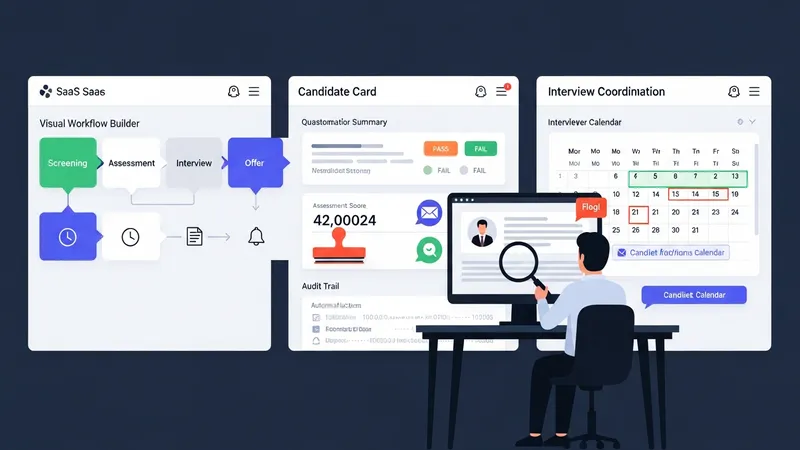
Common automation sequences include screening questionnaires, assessment invitations, and interview coordination. Screening forms can automatically evaluate minimum criteria and tag candidates for manual review. Assessment invitations may be issued when a candidate reaches a qualifying stage, and results may be recorded back into the candidate record. Interview coordination automations often compare interviewer availability windows and send candidate-facing calendar links; when implemented carefully, these features can reduce scheduling cycles but typically require oversight to handle exceptions and reschedules.
Pipeline orchestration can also include conditional branching to reflect different position types or hiring policies. For example, internal mobility processes may route candidates through an internal approval step, while external applicants may follow a different screening sequence. Conditional workflows may leverage metadata such as position level, department, or required clearances. Documentation of workflow logic and versioning practices is often recommended so teams can maintain transparency and adjust sequences as hiring needs evolve.
Monitoring automation effectiveness generally relies on a combination of process metrics and qualitative feedback. Commonly measured signals include average time per stage, automated message open rates, and the proportion of candidates progressing after automated screening steps. Periodic reviews often reveal where automations may be skipping qualified applicants or where manual intervention is still required. Iterative adjustments—making small changes and observing impacts—are a typical approach for keeping automation aligned with hiring quality objectives.