
Applicant Tracking System: Key Features, Functions, And Use Cases

Core features and modules of applicant tracking systems
Core modules in candidate management platforms generally include intake forms for position postings, a candidate database, pipeline or stage management, and communication tools. Intake and posting modules capture position details and may distribute those descriptions to multiple outlets via distribution connectors. The candidate database stores parsed resume data and application history, often with tagging fields and resume attachments for later retrieval. Pipeline views typically show candidates by stage — such as screening, interview, or offer — and may allow bulk actions like batch messaging or staged movement to streamline routine processing.
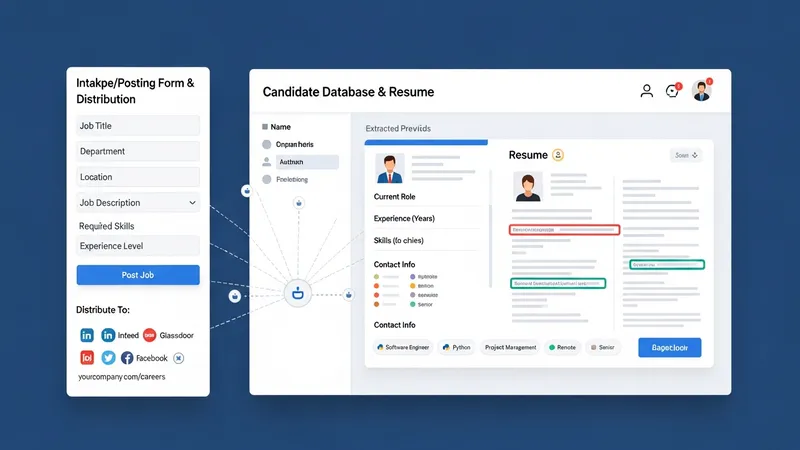
Parsing and structured data extraction are often supplied either by built-in parsers or by connecting to dedicated parsing engines. Parsing engines may provide configurable mapping rules to align extracted fields with a platform’s schema; this can reduce manual re-keying and improve searchability. For organizations with diverse application formats, configurable parsing and review queues often mitigate mismatches. Additionally, configurable stage definitions and customizable status labels can allow workflows to mirror internal hiring conventions without requiring rigid process changes.
Scheduling and assessment integrations are frequently used to remove manual calendar coordination and to centralize evaluation data. Calendar connectors may synchronize interviewer availability and send automated reminders to reduce no-shows. Assessment integrations can attach numeric or rubric-based scores directly to candidate records, enabling comparative views across candidates for the same position. When combined with secure links and standardized scoring, these integrations may help reduce administrative overhead and provide consistent evaluation artifacts for hiring decisions.
Security and permissions control are commonly embedded to protect candidate data and maintain regulatory compliance. Role-based access can restrict sensitive fields and activity logs can track who accessed or modified candidate records. Many platforms provide audit trails and export controls to support privacy reviews. For organizations subject to data-protection requirements, configurable retention policies and anonymization or deletion workflows may be important considerations when selecting or configuring a platform.