
Auto Insurance: Introduction To Comparing Features Across Multiple Policy Options

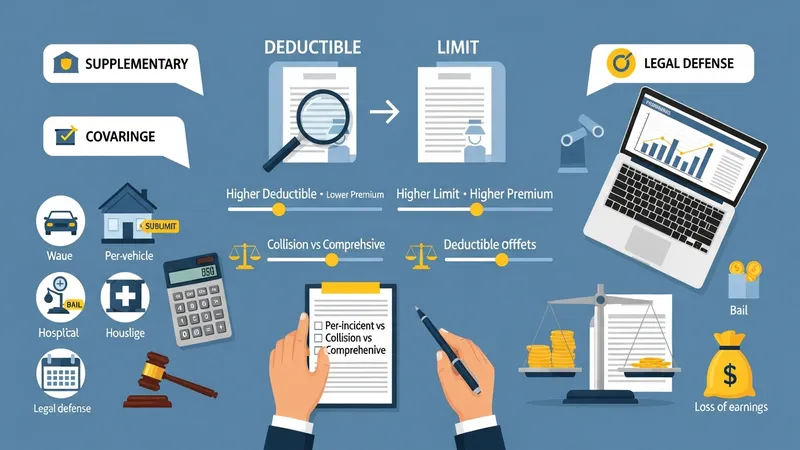
Deductibles, limits, and liability features to weigh in comparisons
Deductible and limit structures are central numeric elements in policy comparisons. A higher deductible often corresponds with a lower premium estimate, while higher limits generally increase premium exposure. When comparing policies, pay attention to whether deductibles apply per incident or per vehicle, whether there are separate deductibles for collision and comprehensive, and whether any deductible offsets apply for certain claim types. Limits should be compared in both name and how they are applied — per-person versus per-accident split limits versus single-limit policies, for example.
Liability protections can be structured with different limit combinations and optional features such as supplementary payments. Policies may provide varying coverages for legal defense costs, bail bonds, or loss of earnings while attending trials; these items often appear under “supplementary payments” and can be compared as part of liability features. Additionally, consider whether a policy includes sublimits for specific property types or medical payments, as these can constrain payouts even when an overall liability limit seems adequate.
Understanding how uninsured and underinsured motorist coverages operate is important for comparisons. These coverages may be required in some jurisdictions and optional in others, and they can be defined on a per-person or per-incident basis. The interplay between an insurer’s limits and the typical exposure in an area — such as the frequency of third-party underinsurance — may influence the practical value of higher UM/UIM limits. Comparing the extent of coverage and any stacking rules can clarify how much protection will be available post-accident.
Some policies incorporate alternative dispute resolution clauses or specify legal forums and arbitration procedures for claims disputes. These procedural elements can affect the post-loss experience and potential recoveries. When comparing policies, note whether dispute resolution is handled through arbitration, mediation, or traditional court processes, and whether legal cost coverage is explicitly included. While these features may not alter premiums substantially, they influence how claims are resolved and should be considered alongside numeric limits and deductibles.