
Brokerage Accounts And Trading Platforms: Key Features And How They Work

Brokerage accounts and trading platforms refer to the combination of an account held by an investor with a brokerage firm and the digital interfaces used to place and manage trades. The account itself defines legal ownership, tax treatment, and available services, while the platform provides the tools to view prices, enter orders, monitor positions, and access research. Together they determine what asset types an investor can hold (for example equities, bonds, exchange-traded funds, or mutual funds), what order types can be used, and how information is presented for decision-making.
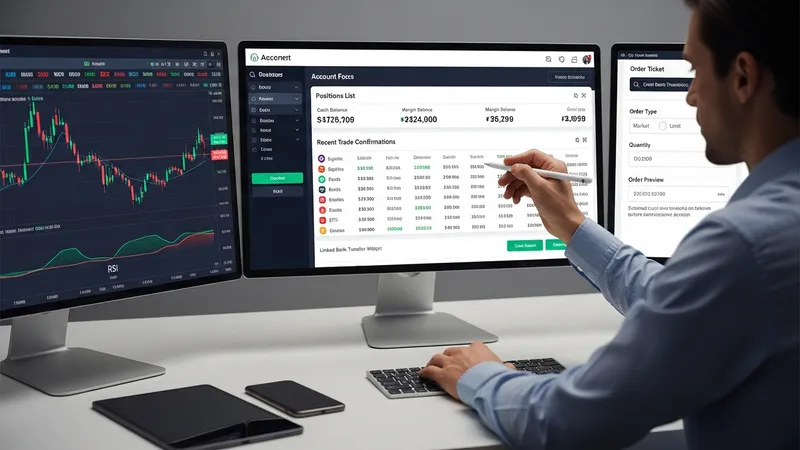
The platforms often integrate market data, charting, and account administration functions that interact with the brokerage’s clearing and custodial systems. Brokerage accounts may include features such as cash or margin balances, linked bank transfers, and settings for trade approvals or restrictions. Regulatory requirements and custody arrangements commonly influence how customer assets are held and how account statements and trade confirmations are delivered, which affects operational workflows on the platform side.
- Full-service brokerage platforms — Offer personalised advisory services, in-depth research, and managed-account features; may charge advisory or transaction fees and typically include human adviser access.
- Discount or online brokerages — Provide self-directed trading with streamlined digital interfaces and lower per-trade costs; platforms often emphasise speed, trade execution tools, and market data tiers.
- Robo-advisors and hybrid platforms — Use automated algorithms to construct and rebalance portfolios, sometimes combined with human support; they may charge an advisory fee based on assets under management and offer defined model portfolios.
Comparing these examples helps clarify functional trade-offs that may arise between service breadth and cost. Full-service platforms may include non-trading services such as financial planning templates and deeper research databases, while discount brokerages often prioritise execution speed and simplified fee structures. Robo-advisors typically automate portfolio construction and rebalancing, which can reduce manual oversight but may limit customization. Each model may support common account types such as taxable brokerage accounts, retirement accounts, and custodial accounts, but the exact offerings and constraints often vary by provider.
Order entry and execution are core technical functions embedded in platforms and may affect trading outcomes. Typical order types available across platform examples include market orders, limit orders, and stop orders; some platforms extend these with conditional or algorithmic orders. Execution may route through multiple venues such as exchanges, alternative trading systems, or internalizers; routing logic can prioritise price improvement, speed, or certain liquidity sources. Transparency about routing and execution quality can differ among providers and may appear in regulatory disclosures or execution-quality reports.
Market data and analytical tools are frequently differentiated by depth and cost. Some platforms provide real-time quotes, historical time series, and advanced charting at no additional fee, while others gate premium data behind subscription tiers. Research content can include analyst reports, company filings, economic calendars, and screeners that filter securities by metrics. The degree to which a platform bundles these tools often reflects its business model; users may see integrated research in full-service offerings and modular add-ons in discount or hybrid services.
Account features that involve financing, tax handling, and custody can shape practical usage. Margin lending, for example, may be available subject to margin requirements and interest rates that can vary by broker. Tax reporting tools and year-end statements typically accompany custody services, and some platforms offer automated tax-loss harvesting or consolidated tax documents. Security and authentication features such as multi-factor authentication, encryption, and custodial segregation are typically provided to protect client assets and data.
In summary, the concept combines legal account structures with technological platforms that enable trade execution, portfolio management, and account administration. Examples such as full-service brokerages, discount platforms, and robo-advisors represent common approaches that differ in service emphasis, cost structures, and available tools. Selection of a particular model may depend on an investor’s need for advice, desire for control, and tolerance for fees. The next sections examine practical components and considerations in more detail.