
CAASM: Understanding Cyber Asset Attack Surface Management Fundamentals

Risk Identification and Prioritization in CAASM
Risk identification within CAASM typically involves correlating asset inventory with vulnerability, configuration, and exposure data. An inventory record may be linked to recent vulnerability scanner findings, configuration baseline deviations, or publicly visible services. Prioritization often considers asset criticality, business impact, and exploitability indicators rather than relying solely on severity scores. This contextual approach can help teams focus on assets where remediation may most effectively reduce organizational exposure, while acknowledging uncertainty and the need for further validation where correlations are inferred.
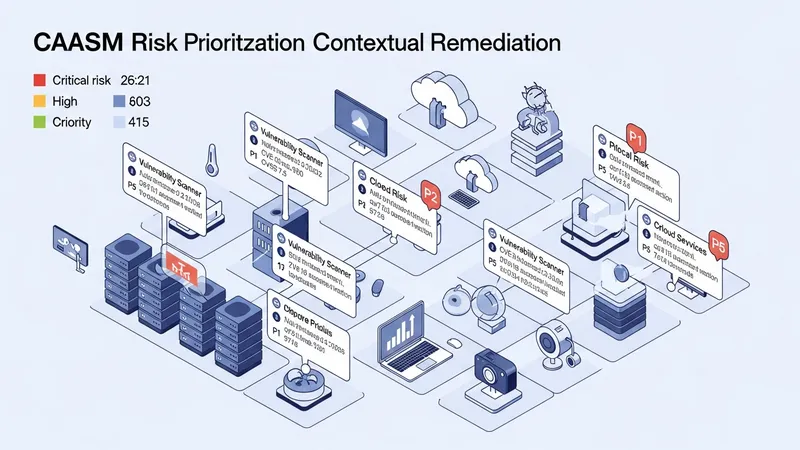
Vulnerability and threat intelligence integration can provide signals that adjust prioritization. For example, the presence of a publicly disclosed exploit targeting a specific software component may raise urgency for affected assets that are internet-exposed. Similarly, configuration drift that opens remote management ports could increase exposure. These signals are typically combined with asset owner information and operational constraints to determine feasible remediation timelines, recognizing that practical constraints often necessitate staged mitigation strategies.
Scoring and metric design are areas where CAASM outputs are often translated into operational guidance. Metrics such as coverage percentage, mean time to detect new assets, and proportion of assets mapped to an owner may be tracked. Prioritization frameworks may use weighted factors—business criticality, exposure, vulnerability severity—to rank remediation tasks. These frameworks often require periodic tuning and validation to ensure they reflect organizational priorities and do not overemphasize any single input source.
Uncertainty management is a recurring theme in risk workflows. When asset records contain ambiguous identifiers or low-confidence correlations, teams may flag items for verification rather than immediate classification. Including human-in-the-loop review gates, evidence collection procedures, and clear escalation paths can reduce the risk of incorrect prioritization. These controls often help balance automation benefits with the need for accuracy in producing actionable risk insights.