
Consolidation Loans: How Combining Debts Into One Payment Works

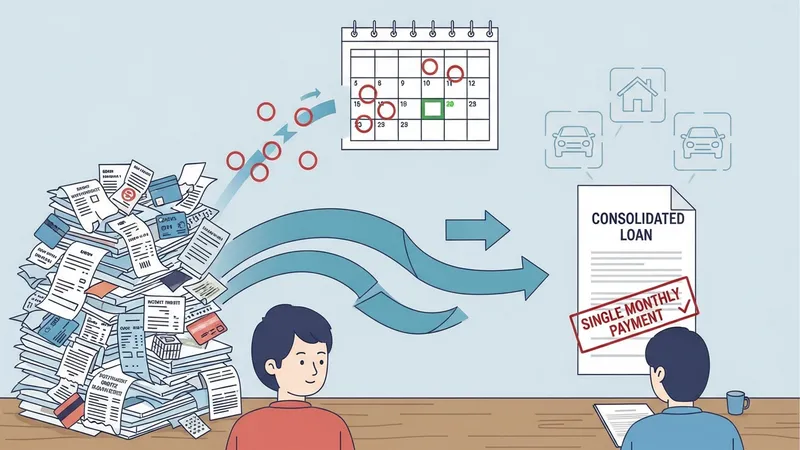
Combining several outstanding balances into a single loan involves replacing multiple repayment schedules with one consolidated obligation that typically has a single monthly installment. This approach centralizes outstanding balances such as credit balances, store accounts, and unsecured instalment debts into one structured repayment plan under a single creditor or repayment arrangement. The consolidated loan may be secured or unsecured, and it can carry different repayment lengths and interest calculations than the original obligations.
Consolidation generally changes how interest accrues, how payments are applied, and which fees are charged. Some consolidation options convert revolving balances into fixed-term instalments, while others use a credit facility secured by an asset. The process often involves closing or leaving open the original accounts depending on the consolidation method chosen, and the new single payment replaces multiple due dates and amounts.
- Balance transfer card — A revolving-credit card that allows moving one or more card balances to a single card, often with an introductory low-rate period; suited for primarily credit-card balances and typically requires a credit account in good standing.
- Unsecured personal consolidation loan — A fixed-term instalment loan from a bank or credit union used to repay multiple debts, converting several payments into one fixed monthly payment without using collateral.
- Secured consolidation loan (home-equity or secured instalment) — A loan that uses an asset as collateral, which may lower the nominal interest rate but introduces collateral risk and often involves longer repayment terms.
- Non-profit debt management arrangement — A structured plan arranged by a non-profit counselling agency that negotiates with creditors to consolidate payments into one monthly remittance while fees and terms remain subject to negotiation.
Different consolidation routes may change the effective cost and repayment timing. For example, moving revolving balances into a fixed-term instalment can produce predictable monthly obligations but may extend the repayment horizon, which could increase total interest paid over time. Conversely, using a secured facility may reduce periodic interest rates but can attach a secured interest to an asset, which is an important trade-off to consider. Readers should view these options as alternative methods for centralising repayment rather than as uniform solutions.
Fees and introductory incentives can affect the near-term and long-term costs of consolidation. Promotional low-rate periods on revolving accounts may last a limited time, and balance transfer or origination fees can offset initial savings. Secured loans may involve closing costs or appraisal fees, while non-profit arrangements typically include administrative fees that vary by provider. When estimating comparative cost, it can be helpful to consider both the stated rate and any up-front or ongoing charges that may change the overall expense profile.
Eligibility criteria often differ by consolidation method and by lender or agency. Unsecured personal loans typically require assessment of credit history, income stability, and repayment capacity. Balance transfer options generally depend on available credit limits and account standing. Secured loans may accept lower credit profiles in exchange for collateral. Non-profit plans usually require documentation of income and expenses and rely on creditor participation in negotiated terms. These eligibility differences can influence which consolidation approach is feasible for an individual.
Potential limitations commonly include the risk of extending repayment durations, which can increase total interest paid even when monthly instalments fall, and the possibility that original accounts remain open and available for new borrowing unless explicitly closed. Consolidation may also affect credit-reporting items such as the mix of accounts and utilisation ratios, which can influence credit profile metrics. Each method carries trade-offs related to cost, flexibility, and risk that merit careful review.
In summary, centralising multiple obligations into one structured loan or plan aims to simplify repayment logistics and may change cost, risk, and eligibility factors. Different methods—revolving balance transfers, unsecured instalment loans, secured facilities, and managed payment plans—offer varied combinations of predictability, cost, and collateral considerations. The next sections examine practical components and considerations in more detail.