
Coro Cyber Security: Overview Of Integrated Cyber Protection For Modern Workplaces

Component types within integrated cyber protection for modern workplaces
Understanding component types helps clarify how integrated protection is assembled. Core components commonly include endpoint protection that monitors device activity and applies containment, email and collaboration security that inspects inbound and outbound messages and links, cloud access monitoring to discover and control application usage, identity services that govern authentication and access, and data protection that enforces handling rules. Each component typically contributes telemetry and enforcement capabilities. When these components exchange context, detection fidelity may increase because events are evaluated with information about the user, device posture, and data sensitivity.
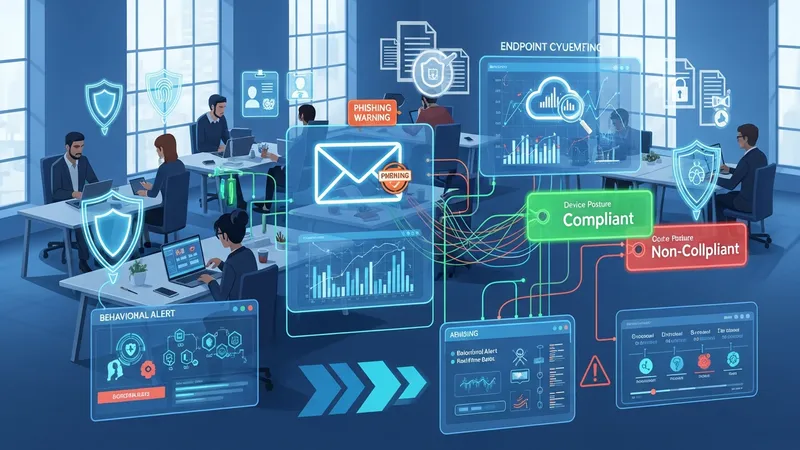
Endpoint capabilities often combine antivirus-style prevention with behavioral and forensic telemetry that supports investigation. Email controls focus on message hygiene and phishing defenses, while cloud monitoring tracks application usage and permission configurations. Identity components supply contextual signals such as recent authentication patterns and device compliance state. Data controls tag and protect information through labeling and encryption. Together these components form layers where prevention, detection, and response mechanisms can coordinate to address threats that span multiple channels.
Integration among components may be achieved through APIs, event streaming, or native platform connectors. Data normalization and timestamp alignment are operational considerations to ensure correlated events are meaningful. Security teams may prioritize which telemetry to centralize based on incident criticality and storage costs. When building or evaluating an integrated solution, organizations often examine how easily the components can share indicators, whether policies can be propagated across services, and how incident data is presented for triage and reporting.
Operational roles and processes also interact with component design. For example, a detection from endpoint telemetry may generate a severity-tagged alert for SOC analysts, who can view related email and identity events in the same incident record. Playbooks may indicate when automated actions are appropriate versus when analyst review is required. These procedural connections are part of component planning because integrated controls are effective only if response workflows and responsibilities are clearly defined and tested.