
Fall Alert For Seniors: How Personal Alert Systems Work At Home And Outdoors

Types of Personal Alert Systems for Seniors at Home and Outdoors
Wearable pendants and wristbands typically serve as the simplest type of personal alert: a button press sends a signal through a home base unit or paired phone to notify chosen contacts. These units often prioritize ease of use and long battery life. Automatic fall-detection wearables use motion sensors and onboard algorithms to detect signature patterns associated with falls; they may trigger alerts automatically but can generate false triggers depending on sensitivity and the wearer’s activity profile. Smartphone-based solutions rely on the phone’s sensors and GPS to provide location and may include one-touch interfaces for alerts. Hybrid systems combine a home base for indoor coverage with cellular or smartphone links for outdoor mobility.
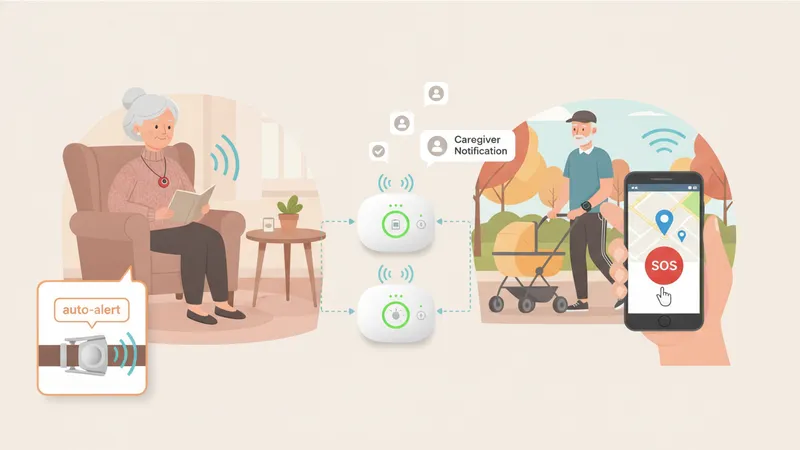
Placement and design influence effectiveness. Neck pendants and chest-level clips often register button presses and are less likely to be obstructed by clothing, while wrist-worn devices may be convenient for those accustomed to watches. Motion-sensor algorithms generally perform better when tuned to the individual’s typical movement patterns; professional configuration or user-adjustable sensitivity may reduce unnecessary alerts. When considering alternatives, it is informative to think about daily routines: devices that match where a person typically carries items are more likely to be available at an incident moment.
Power and charging patterns are practical differentiators. Some wearables use replaceable batteries that may last months, while rechargeable units may need nightly charging similar to a smartphone. Home base stations often plug into mains power with battery backup for brief outages. For outdoor use, cellular-enabled wearables can operate independently of a phone but depend on network coverage. Regularly checking battery indications and scheduling routine charging or battery replacement is a common maintenance consideration to preserve readiness.
Interoperability and accessory ecosystems can affect long-term usability. Certain devices work only with a particular provider’s monitoring service; others offer open interfaces or optional pairing with a caregiver’s smartphone. For users who travel or who split time between home and community settings, solutions that adapt—by switching between base-station and cellular modes or by integrating with commonly used smartphones—may provide more continuous protection. These factors often shape practical decision-making more than raw device specifications alone.