
GE Vscan Air Ultrasound: Overview Of Handheld Point‑of‑Care Imaging

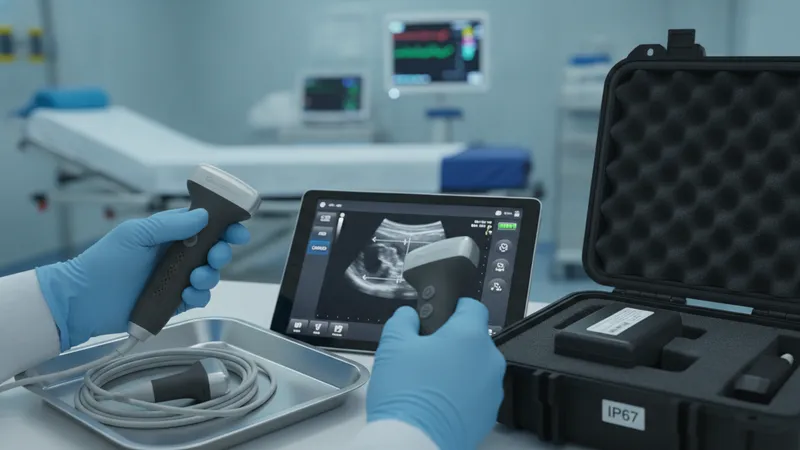
Design and portability considerations for handheld point-of-care ultrasound
Physical design and portability determine where and how handheld ultrasound devices can be used. Many models aim for a balance between a lightweight transducer and sufficient battery capacity to support multiple scans per shift. Wireless probes that pair with mobile displays can reduce cable clutter and increase mobility, while tethered probe-and-tablet configurations may offer more predictable connectivity. Case size, weight, and available probe footprints often influence use in emergency departments, outpatient clinics, or field environments. Device durability and ingress protection ratings can also be relevant for use outside controlled imaging suites.
Ergonomics and user interface design can affect scanning efficiency and user fatigue during repeated exams. Probe handle shape, button placement, and the responsiveness of touch-screen or physical control options often shape operator preference. Mobile applications commonly provide exam presets, measurement tools, and image optimization controls; the intuitiveness of these interfaces may reduce time to diagnostic-quality images for routine focused exams. Heat dissipation, slip resistance, and ease of cleaning are additional design factors that may affect daily practical use.
Battery life and charging workflows are operational considerations that often influence deployment choices. Typical handheld units may support several hours of active scanning or a set number of examinations per charge; institutions sometimes maintain charging docks or rotating loaner devices to ensure availability. Battery performance may vary with screen brightness, wireless transfer activity, and the use of power-intensive software features such as continuous Doppler or high-frame-rate modes. Planning for charging cycles and spare devices can reduce downtime in high-volume settings.
Material and ingress protection ratings provide insight into a device’s suitability for varied environments. Some devices include water- and dust-resistance ratings intended to support routine cleaning and disinfection processes. Agencies or facilities may establish cleaning protocols aligned to device recommendations to balance infection control and device longevity. When selecting or deploying handheld ultrasound, matching device durability and maintenance patterns to the intended clinical environment can support sustained operation and reduce unexpected interruptions.