
Legal Workflow Automation: Streamlining Document Management And Review Processes

Document intake and routing for legal workflow automation
Intake and routing define how incoming documents enter a legal workflow and arrive at the correct reviewers. Intake methods commonly include structured web forms, email ingestion, and scanned document capture with OCR. These capture steps often apply initial metadata—such as matter number, document type, or priority—that informs routing decisions. Conditional routing rules can forward documents to specific queues or teams based on metadata values or keyword matches. Organizations frequently pilot intake automation on a small set of templates or matter types to validate classification accuracy and routing logic before scaling.
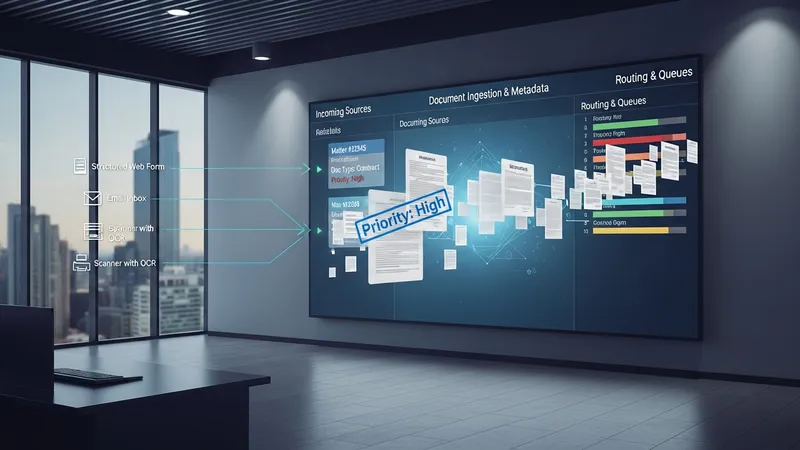
Designing intake forms typically balances required fields against user convenience. Excessive required metadata can reduce compliance with submission standards, while too little metadata can increase downstream manual work. Systems often implement progressive disclosure, capturing minimal mandatory fields up front and prompting for richer metadata later in the workflow. Mapping common submission patterns can help define sensible defaults and reduce friction. These design choices may affect how reliably routing rules assign documents, and teams often measure initial error rates to guide refinements.
OCR and text extraction are commonly used for documents that arrive as images or scanned PDFs. Extracted text can be indexed for full-text search, used to populate metadata, or fed into classification models. Accuracy of extraction may vary by source materials and scan quality, so verification steps or human-in-the-loop checks are often included for critical document categories. When text extraction feeds automated routing, teams may set conservative thresholds for automated classification and route lower-confidence items to a human queue to prevent misrouting.
Routing logic can include escalation and exception handling to manage unusual cases. For example, if assigned reviewers are unavailable, rules may escalate items to backup reviewers or managers. Workflow engines often log routing decisions and reasons for exceptions to support audits and process improvements. Teams typically document routing criteria and maintain mapping tables so changes to organizational structure or practice area responsibilities can be reflected in routing configurations without disrupting ongoing operations.