
Legal Workflow Automation: Streamlining Document Management And Review Processes

Review, approvals, and version control in legal workflow automation
Automated review and approval sequences define how documents move through assessment, commentary, and sign-off stages. Workflows may include parallel or sequential review paths, configured timeboxes for reviewer response, and role-based approval gates. For document markup, integration with redlining and comparison tools helps maintain a clear history of edits. Systems commonly track who made each change, when, and which version was approved. This metadata supports accountability and can simplify later inquiries about negotiation histories or approval rationales.
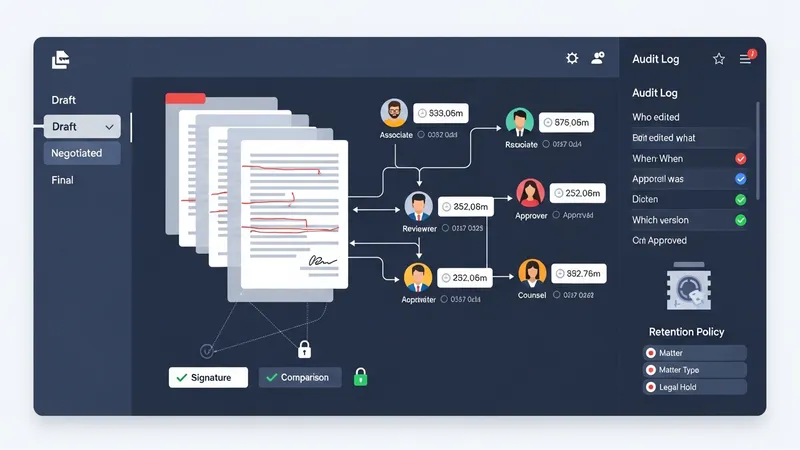
Version control strategies often combine immutable audit logs with managed draft versions. Some implementations maintain a single canonical file with tracked changes, while others store discrete versions for major milestones such as draft, negotiated, and final. Retention policies applied to versioned documents may vary based on matter type or regulatory requirements. Teams commonly define retention and archival rules up front so that automated pruning or long-term storage aligns with legal hold obligations and reduces unnecessary repository growth.
Approval routing can include conditional steps based on content or monetary thresholds. For instance, contracts exceeding a certain limit may be routed to senior counsel or a finance reviewer. These conditional approvals are codified in workflow rules and often accompanied by required fields or checklists to ensure that approvers have necessary context. Automated reminders and escalation paths can reduce bottlenecks, but organizations typically avoid fully automating discretionary legal judgments and instead surface context to human approvers for final decisions.
Collaboration features that support annotated feedback and consolidated comment threads may reduce version proliferation. Centralized comment capture can make it easier to reconcile reviewer feedback rather than exchanging multiple email attachments. However, teams should consider user training and standardized annotation practices so that comments remain actionable and traceable. Periodic reviews of version growth and review cycle times help identify opportunities to simplify review steps or adjust approval thresholds to balance thoroughness with efficiency.