
Lutetium-177 Side Effects: What Patients And Caregivers May Need To Know

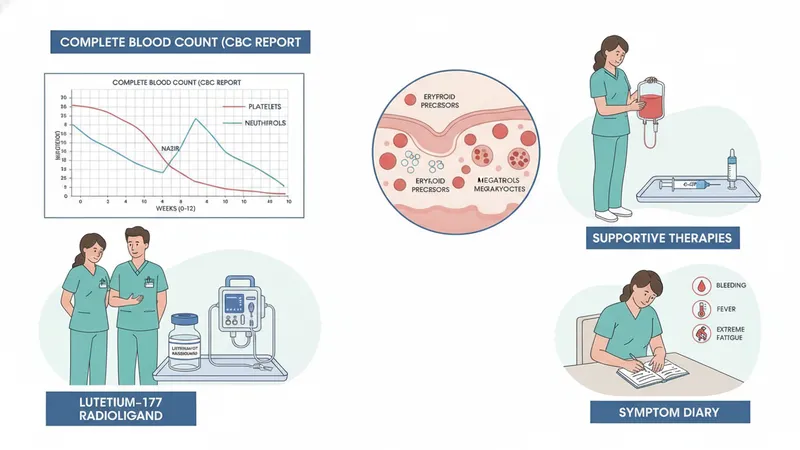
Hematologic Changes and Monitoring Related to Lutetium-177
Bone marrow exposure can lead to reductions in one or more blood cell lines after systemic radioligand therapy. Decreases in platelets, neutrophils, and hemoglobin may develop over several weeks and sometimes peak within one to three months, though timing varies across studies and individual cases. Baseline marrow reserve, prior cytotoxic or radiation treatments, and cumulative radioactive dose can influence susceptibility. Monitoring schedules often include a baseline complete blood count (CBC), short-interval CBCs after each administration, and periodic checks during follow-up to detect delayed cytopenias.
When trends show falling counts, clinicians may consider pauses in additional dosing or supportive measures tailored to the specific deficit. Options described in clinical practice include transfusions for symptomatic anemia or thrombocytopenia and growth-factor support for prolonged neutropenia; these interventions are clinical decisions made case by case. Caregivers can help by recording bleeding, fever, or extreme fatigue and communicating these signs promptly to the treatment team to inform assessment and potential interventions.
Monitoring frequency may be intensified for patients with prior marrow compromise or those receiving multiple cycles within a short timeframe. Some institutions schedule CBCs weekly for the first month after an infusion and then extend intervals as counts recover, while other programs use less frequent checks guided by observed patterns. The overarching aim of surveillance is to identify clinically meaningful declines and allow the care team to weigh the benefits and risks of continued dosing in a measured way.
Clinical reports often describe a spectrum of hematologic effects rather than uniform patterns; therefore, interpretation of laboratory changes is contextual. Age, comorbidities, and concurrent therapies influence baseline values and recovery capacity. Clear documentation of baseline results helps differentiate treatment-related changes from other causes such as nutritional deficits, infection, or chronic conditions. Ongoing communication between patients, caregivers, and clinicians supports timely recognition and appropriate response.