
Metal Roofing: Key Materials, Styles, And Applications Explained

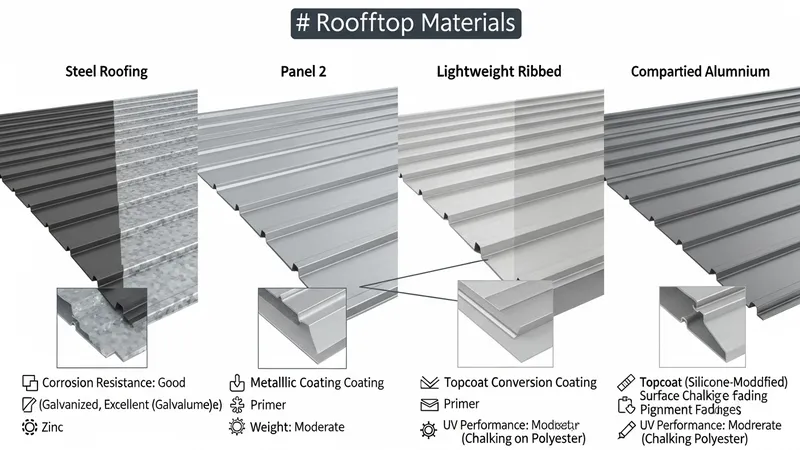
Metal Roofing Materials and Coating Options
Base metals used for roofing—steel, aluminum, copper, and zinc—each present distinct corrosion and weight characteristics that influence selection. Steel is often provided with mill-applied coatings such as zinc (galvanized) or zinc-aluminum (galvalume) to improve corrosion resistance; these coatings may extend expected service life in many environments. Aluminum offers inherent corrosion resistance and a lower density, which can reduce structural loading. Copper and zinc are more corrosion-resistant and form protective films with age. Coating systems applied after forming include various organic paints and fluoropolymer finishes that may increase color stability and surface durability over time.
Coating type affects not only aesthetics but also weathering and thermal behavior. Organic paint systems (polyester, silicone-modified polyester, fluoropolymer) vary in UV resistance and chalking rates; fluoropolymer finishes often show lower fade rates under prolonged sun exposure compared with standard polyesters. Metallic coatings applied at the mill act as sacrificial barriers on steel. Reflective pigments and light colors can enhance solar reflectance and reduce surface temperatures, potentially affecting building energy flows. Considerations often include compatibility between metal substrate and coating chemistry to prevent premature degradation.
Edge and accessory components like flashing, trim, and fasteners must be selected with material compatibility in mind to avoid galvanic corrosion. For example, dissimilar metals in contact in wet environments may accelerate corrosion unless isolating materials are used. Fastener materials and coatings are equally important; stainless steel or coated fasteners are commonly paired with certain metals to reduce long-term corrosion risk. Sealants and underlayment choices also interact with coatings and metal substrates and may affect adhesion and longevity.
Practical considerations include anticipated maintenance cycles and the environment where the roof will be located; marine or industrial atmospheres may require specific alloys or thicker coatings. When evaluating materials, lifecycle considerations such as recyclability, repairability, and long-term aesthetic change (for example, patination of copper) may be relevant for design decisions. These factors often inform trade-offs between initial cost, weight, and expected maintenance needs.