
Metal Roofing: Key Materials, Styles, And Applications Explained

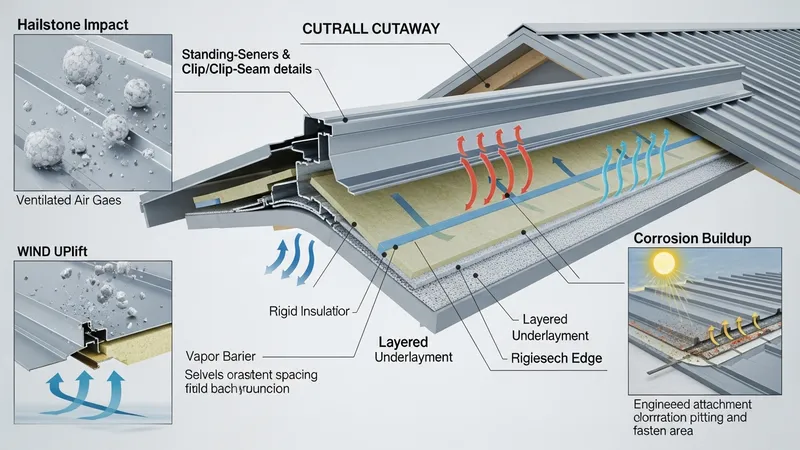
Durability, Weather Resistance, and Energy Performance of Metal Roofing
Metal roofing systems are often evaluated for durability in terms of resistance to corrosion, wind uplift, hail, and UV exposure. Corrosion resistance depends on base metal selection and coatings; thicker coatings and certain alloys typically perform better in corrosive environments. Wind resistance is a function of panel profile, seam and fastener design, and attachment spacing; some panel systems are engineered and tested for specified uplift ratings. Hail resistance varies by metal thickness (gauge) and substrate support; metal may dent under impact but is less likely to allow water penetration if deformations do not breach seams or fasteners.
Thermal performance of metal roofs is influenced more by insulation, underlayment, and ventilation than by the metal alone. Reflective coatings and lighter colors may increase solar reflectance and reduce heat absorption on sunny days, which can affect interior cooling demand in warm climates. Conversely, metal roofs with high emissivity may radiate heat effectively at night. Condensation control is a consideration for uninsulated metal roofs; vapor barriers, proper ventilation, and thermal breaks can reduce condensation risk where interior humidity is present.
Weatherproofing details such as seam configuration, sealants, and flashing complexity play a central role in long-term leak prevention. For sloped roofs in wet climates, panel overlap and continuous seams help shed water and limit reliance on sealants. In cold climates, attention to eave protection and ice-dam mitigation is often relevant to prevent water backup under panels. Regular inspections after major storms or seasonal transitions may identify fastener issues or sealant deterioration that can be addressed before leaks escalate.
Lifecycle assessments may consider repairability and recyclability; many metal roofing materials are recyclable at end of life, and localized repairs of panels or flashing are often feasible without full replacement. Cost-benefit considerations typically weigh material and installation costs against anticipated service life, maintenance needs, and potential energy effects when combined with appropriate insulation and ventilation strategies. These performance attributes are often considered together when planning a roof system for a specific building and climate.