
NCCN Non-Small Cell Lung Cancer: Overview Of Guideline-Based Care Pathways

The concept of NCCN non-small cell lung cancer (NSCLC) guideline-based care pathways describes a structured approach to clinical decision-making that aligns diagnostic, staging, molecular testing, treatment selection, and follow-up steps with current evidence summaries. These care pathways typically present sequence-oriented options that clinicians may use to evaluate a newly identified lung lesion, determine extent of disease, and match findings to appropriate local and systemic therapies. The framework is intended to organize information so multidisciplinary teams can consider patient-specific factors, tumor characteristics, and available resources when formulating individualized management plans.
In practice, guideline-based care pathways for NSCLC often clarify which diagnostic tests are commonly indicated, which staging procedures may be appropriate, and when to perform targeted biomarker assays. The pathways typically integrate recommendations about imaging modalities, tissue acquisition methods, and the timing of molecular or immunologic assays relative to treatment planning. They also outline approaches for assessing response to therapy and for surveillance after initial treatment, noting that specific choices may vary according to clinical context and evolving evidence.
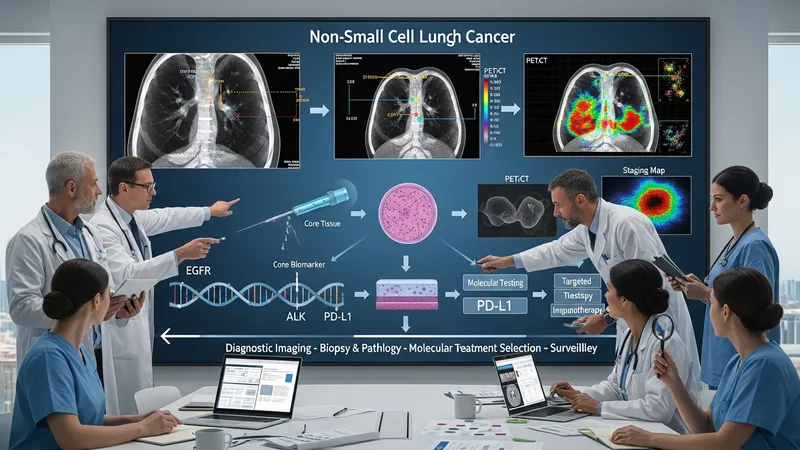
- Diagnostic and staging workflow: a sequence of imaging and tissue-sampling methods with descriptive notes on indications and typical roles in care pathway development.
- Biomarker-driven molecular profiling: methods for obtaining and interpreting molecular and immunohistochemical test results that may inform systemic therapy selection.
- Multimodality treatment planning: coordinated approaches that describe the integration of surgery, radiation, and systemic therapies based on stage and patient factors.
Diagnostic and staging workflow as a pathway component often begins with cross-sectional imaging and targeted tissue sampling. Imaging such as chest computed tomography (CT) and positron emission tomography (PET) may be used to assess local extent and distant disease, while bronchoscopy, percutaneous biopsy, or surgical sampling may provide diagnostic tissue. The pathway may emphasize obtaining adequate material for both pathologic diagnosis and downstream molecular testing, since insufficient tissue can delay subsequent steps. Recommendations generally note that sequencing of these actions can vary and should take into account clinical urgency and patient comorbidities.
Biomarker-driven molecular profiling within guideline-based pathways typically outlines which assays are commonly considered and how results can influence systemic therapy options. Testing for driver alterations, gene rearrangements, and protein expression markers may be described as part of the initial diagnostic workup for certain stages. The pathway framework often suggests parallel processing—performing molecular assays while staging is completed—to reduce delays in treatment planning. Guidance usually frames testing as informing choices rather than dictating a single course, acknowledging that access to assays and therapies can differ by setting.
Multimodality treatment planning in these pathways commonly describes how local therapy (surgery, radiation) and systemic therapy (chemotherapy, targeted agents, immunotherapy) may be integrated. The pathway may delineate typical scenarios—for example, operable early-stage tumors managed primarily with resection, versus locally advanced disease managed with combined modality approaches. Emphasis is often placed on multidisciplinary review to consider patient fitness, pulmonary function, and tumor features. The pathways usually underline that sequencing and combinations may be tailored based on individual risk–benefit considerations.
Response evaluation and surveillance elements within care pathways generally provide structured intervals for clinical assessment, imaging, and, where appropriate, laboratory monitoring. The framework may describe criteria for radiographic response assessment and recommended timing for follow-up imaging after definitive therapy. Surveillance recommendations often balance the potential for early detection of recurrence with considerations about cumulative testing and patient burden. Pathway documents commonly present ranges of reasonable intervals and highlight that follow-up plans may be individualized.
In summary, the concept of NCCN non-small cell lung cancer guideline-based care pathways involves organized sequences that cover diagnostic assessment, staging, biomarker testing, treatment planning, response evaluation, and follow-up. These pathways aim to present evidence-aligned options and considerations clinicians may use when developing individualized care plans. The next sections examine practical components and considerations in more detail.