
NCCN Non-Small Cell Lung Cancer: Overview Of Guideline-Based Care Pathways

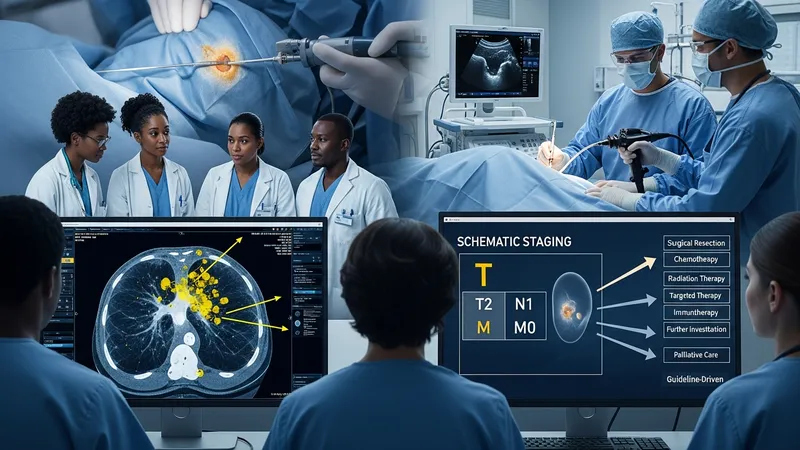
Diagnostic assessment and staging in guideline-based NSCLC care pathways
Diagnostic assessment and staging components of guideline-based NSCLC pathways typically begin with clinical history, physical examination, and targeted imaging. Chest CT with contrast is commonly used to characterize primary lesions and regional nodes, while PET-CT may be used to evaluate metabolic activity and detect occult metastases in many settings. Tissue diagnosis is usually recommended before definitive therapy when feasible; options for tissue acquisition include bronchoscopic biopsy, CT-guided percutaneous biopsy, and surgical sampling. Pathways often stress acquiring sufficient tissue for both histologic classification and molecular testing to streamline subsequent decision steps.
Staging within these pathways is frequently described using standard anatomic staging systems to convey tumor size, nodal involvement, and distant spread. Care pathways may outline when invasive mediastinal staging (for example, endobronchial ultrasound-guided sampling) is appropriate, particularly when imaging findings could alter the therapeutic approach. The pathways also often note that staging results can change initial treatment intent; for instance, detection of limited metastatic sites may shift the plan toward systemic therapy or combined modality approaches depending on patient factors and institutional practice patterns.
Considerations noted in many pathway documents include the timing of diagnostic steps to minimize delays and ensure tissue adequacy. For example, performing molecular testing concurrently with diagnostic confirmation can often shorten the interval to therapy initiation when systemic options are under consideration. Pathways commonly encourage multidisciplinary communication so that radiologists, pathologists, and proceduralists understand the need for specific samples, such as core biopsies or cell blocks, that may be more suitable for comprehensive testing compared with small cytology specimens.
Practical points emphasized in pathways include contingency planning when initial tissue is insufficient and the potential role of repeat biopsy or use of plasma-based assays in select circumstances. The pathways may discuss limitations of certain sampling techniques and the need to weigh procedural risk against the expected information yield. These considerations are presented as contextual factors that may influence the diagnostic sequence rather than prescriptive commands.