
NCCN Non-Small Cell Lung Cancer: Overview Of Guideline-Based Care Pathways

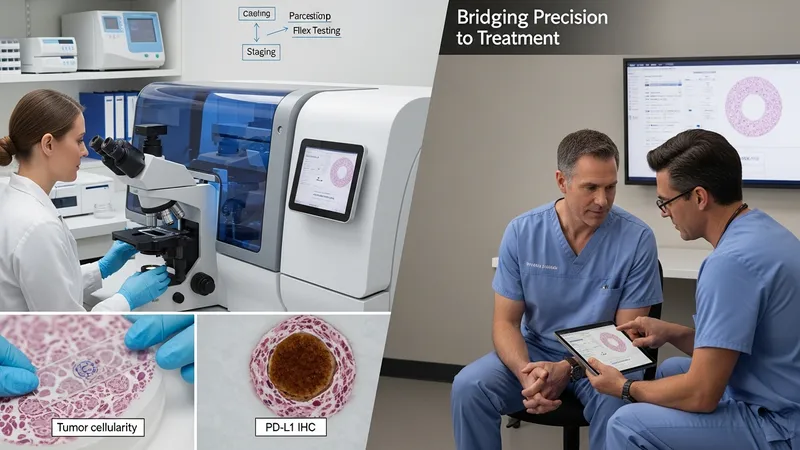
Biomarker testing and molecular profiling within NSCLC care pathways
Biomarker testing and molecular profiling sections of guideline-based pathways outline which assays are often relevant for informing systemic therapy decisions. Commonly described molecular targets, protein expression markers, and gene rearrangements may be listed with guidance on test methodologies—such as polymerase chain reaction panels, next-generation sequencing, or immunohistochemistry—while noting that availability and local laboratory capabilities can vary. The pathways usually recommend that testing be considered early in the care sequence for patients with advanced or recurrent disease and that results be interpreted in the context of clinical and pathologic data.
Pathways frequently address the practical timing of testing, suggesting that molecular profiling proceed in parallel with staging to prevent treatment delays. They may also describe when reflex testing by the pathology laboratory is appropriate and how tumor cellularity and sample quality can affect assay validity. In some settings, plasma-based circulating tumor DNA assays are presented as an adjunctive option when tissue is inadequate or difficult to obtain, recognizing that sensitivity and the spectrum of detectable alterations can differ from tissue-based assays.
Interpretation guidance in these pathways often frames biomarker data as one element among several that inform therapy selection. For example, the presence of a specific actionable alteration may open certain systemic options, while other biomarkers may provide prognostic or predictive information of varying strength. Pathways commonly encourage multidisciplinary review for complex or discordant results and note that confirmatory testing or consultation with molecular pathology may be useful when results will materially influence care.
Operational considerations addressed include sample handling, turnaround times, and communication of results to the treating team. Pathways typically suggest minimizing delays by coordinating sample submission and using laboratories with validated assays; they also note that turnaround times may vary and can affect the timing of therapy initiation. These points are framed as workflow considerations rather than mandates, allowing flexibility based on institutional resources and patient circumstances.