
Pharmacy POS Systems: How Integrated Software Supports Dispensing And Sales

Inventory, Barcode, and Stock Control in Pharmacy POS Systems
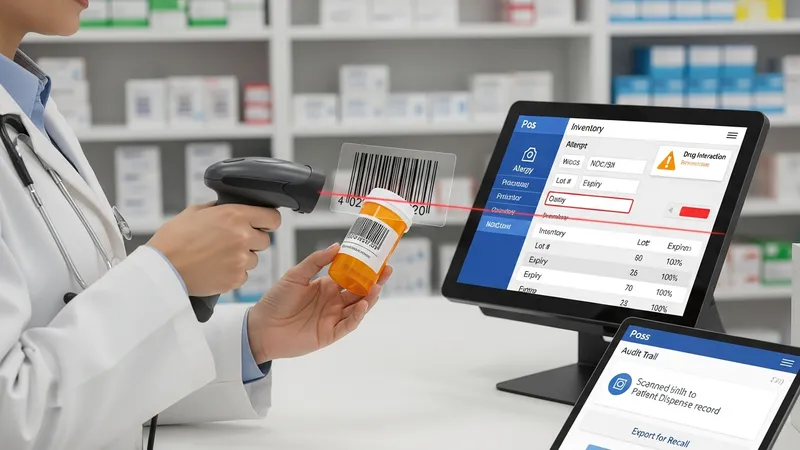
Barcode scanning commonly serves two purposes in pharmacy POS systems: verifying medication at the point of dispensing and speeding retail checkout. Scanning a barcode that maps to a drug’s NDC or SKU can prompt the system to check for interactions, check patient allergies (if linked to a clinical module), and record the specific item dispensed for lot tracking. Barcode-driven workflows may reduce manual transcription errors and create a clear audit trail linking a particular product batch to a patient encounter.
Lot and expiry tracking are often integral to pharmacy inventory control within POS systems, enabling recalls or targeted removals of specific batches. When a product is received, systems may record lot numbers and expiry dates; subsequent dispensing or retail sale decrements inventory for the same lot. These records can support traceability during supplier notifications or recalls, and may be exported for regulators or quality management processes. Maintaining accurate receiving and dispensing entries is typically important to preserve these traceability benefits.
Stock replenishment features in POS systems often use reorder points or consumption patterns to suggest purchase quantities. Systems may calculate typical usage rates over recent periods and propose orders to restore target stock levels. Some setups allow integration with supplier catalogs to create purchase orders directly from the POS interface, while others provide alerts for manual ordering. Such features may help align procurement with demand, though human review commonly remains part of the decision process.
Physical inventory procedures remain relevant even with automated tracking: periodic cycle counts and full inventory audits may be necessary to reconcile differences between system records and on-hand stock. Discrepancies can arise from expired items, theft, manual entry errors, or split packs. Systems typically log adjustments and reasons, and an organized cycle-count schedule can reduce large variances. These practices support accurate reporting and can inform process improvements in receiving, storage, and dispensing.