
Remote Patient Monitoring Devices: Understanding Connected Health Technologies And Their Uses

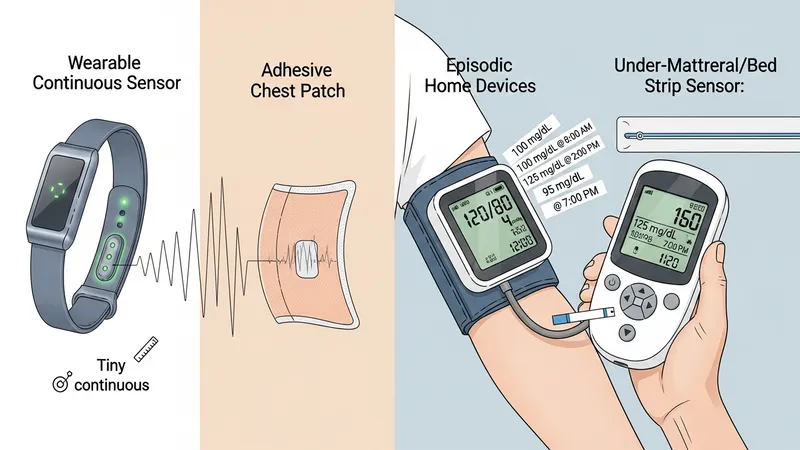
Device types and sensor characteristics relevant to remote monitoring
Sensor categories used in remote monitoring include wearable continuous sensors, episodic home measurement devices, and environmental or contact-based sensors. Wearables often sample at higher frequency and may provide trend data that reveals transient events; they may require skin contact and periodic recalibration. Episodic devices such as automated blood pressure cuffs or glucometers measure discrete timepoints and can be easier for patients to operate without continuous attachment. Environmental or bed sensors can capture movement or respiration indirectly. Each category may trade off between user burden, data richness, and validation needs, and selection can depend on the clinical parameter of interest and the intended monitoring cadence.
Accuracy and clinical validity are common considerations when devices inform care. Validation studies often compare device outputs against clinical reference instruments under conditions that reflect intended use. Factors that may affect measurement quality include sensor placement, device fit, motion artifacts, and physiological variability. Where decisions may be influenced directly by device outputs, programs commonly adopt devices with documented performance in populations similar to the intended users. In contrast, devices used for trend detection may permit different tolerances for absolute accuracy if trends can still be reliably identified.
Power management and connectivity constraints shape sensor design and deployment. Low-power sensors may sample intermittently to extend battery life, while continuous sensors require power-optimized components and charging plans that fit patient routines. Connectivity choices—Bluetooth to a smartphone, direct cellular, or Wi‑Fi—impact data latency, costs, and dependency on patient-owned infrastructure. For example, direct cellular devices may reduce the need for patient smartphones but can carry higher recurring connectivity costs. Program planners often weigh these trade-offs against expected monitoring duration and the technical literacy of the user population.
Usability and adherence influence the utility of collected data. Simpler user interfaces, clear pairing instructions, and unobtrusive form factors can improve consistent use. Training materials that address routine tasks such as charging, sensor placement, and troubleshooting may reduce technical failures and missing data. Passive or minimally obtrusive devices may increase continuous wear time, while episodic devices can be paired with reminders or scheduled check-ins. Considering patient capacity and support resources during selection can help align device characteristics with realistic adherence expectations.