
Senior Camper Van Living: Daily Life, Routines, And Practical Considerations

Living long-term or part-time in a converted van requires adapting daily routines, vehicle layout, and systems so that practical needs are met within a compact footprint. For older adults this often emphasizes ease of movement, simplified daily tasks, predictable storage and utilities, and solutions that reduce physical strain. Daily life in this setting typically centers on balancing mobility with stability: planning routes and stops that allow rest, arranging interior spaces to limit bending or reaching, and establishing routines for cooking, hygiene, and vehicle upkeep.
Considerations for older adults may include reduced mobility, sensory changes, medication storage and access, and social contact. These factors can affect choices about bed height, door thresholds, seating that swivels or reclines, and placement of frequently used items. Managing power, water, and waste systems in a way that aligns with routine medical or personal-care needs can also be part of planning. The focus is often on predictable, low-effort processes rather than elaborate customizations.
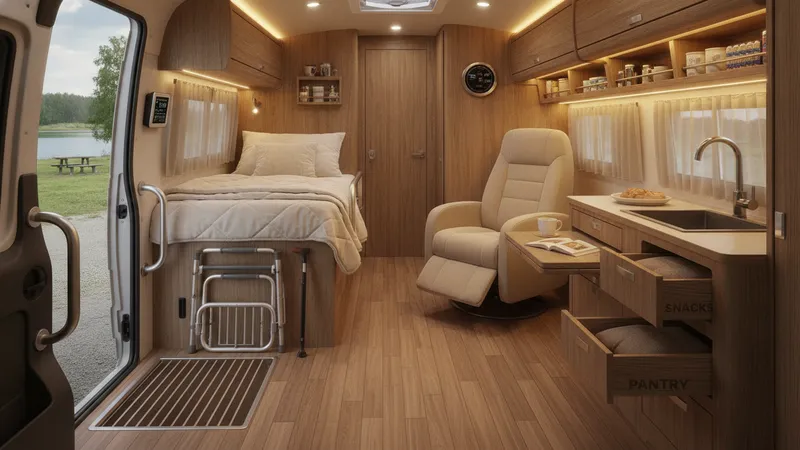
- Adapted accessibility layouts — simple interior modifications such as low-rise beds, grab rails, non-slip flooring, swivel driver seats, and lowered counters that aim to reduce transfers and bending.
- Compact living systems for daily tasks — combinations of small refrigeration, induction or propane cooktops, modular storage, and easily reachable power outlets designed to streamline meal preparation and device charging.
- Hygiene and toilet solutions — options including small wet baths, cassette or portable toilets, and outdoor shower setups; each approach has distinct space, waste-handling, and privacy trade-offs.
Layout choices often reflect trade-offs between accessibility and storage capacity. For example, a low fixed bed may reduce transfers but limit under-bed storage; a fold-away bed can increase storage but require repeated lifting. Wheelchair or walker access usually requires a cleared aisle and reduced step heights, which can consume space that might otherwise be used for cabinets. Material choices such as cushioned flooring and rounded edges can reduce the risk of injury during movement. These considerations may influence decisions about van size and conversion complexity.
Daily routines in a van environment tend to be more intentional than in a conventional home. Typical routines may include morning hygiene at a campsite or rest stop, planned food preparation using compact appliances, scheduled equipment charging, and regular checks of systems like batteries and water tanks. Routines can also include brief maintenance tasks—such as topping up fluids or checking tire pressure—to avoid surprises. Establishing predictable workflows for medication, laundry, and communications may reduce stress and physical demand.
Sleeping and living arrangements can vary from fixed beds to convertible seating areas. Fixed beds often reduce the need to set up each night and may be positioned at an accessible height to reduce transfers. Convertible beds can allow more daytime living space but may require repeated physical effort to transform. Mattresses with pressure-relieving properties may be useful for individuals with joint sensitivity, and options for auxiliary lumbar support or cushions can improve comfort. Ventilation and insulation also affect sleep quality and thermal comfort.
Cooking, food storage, and hygiene choices impact daily convenience and safety. Smaller refrigerators or 12V fridges can preserve perishables with lower power draw, while dry goods stored in labeled, pull-out bins can reduce unnecessary reaching. Induction hobs and well-secured cookware can lower the risk of open-flame incidents during travel. For hygiene, interior wet baths allow privacy and warmth but use more water and require waste management; portable or cassette toilets can be lighter on space but need regular emptying. Each option may be weighed against the frequency of stops and personal mobility.
In summary, living in a van as an older adult involves aligning interior layout, daily routines, and system choices with mobility, comfort, and predictable maintenance needs. Modifications that reduce lifting and bending, systems that support simple daily tasks, and routines that account for energy and water management can all play roles. The next sections examine practical components and considerations in more detail.