
Senior Camper Van Living: Daily Life, Routines, And Practical Considerations

Layout and Accessibility for Senior Camper Van Living
Layout and accessibility determine how easily daily tasks can be performed within a van. Key layout elements often include door threshold height, aisle width, bed configuration, seat placement, and storage accessibility. Those with limited mobility may prefer a single-level floor or a low step-in threshold to reduce transfers; swivel cab seats can create a smoother transition between driving and living areas. Flooring with moderate cushioning and non-slip surfaces may be favored to reduce fall risk and joint stress, and rounded counter edges can limit accidental knocks. These choices typically influence usable floor area and storage strategies.
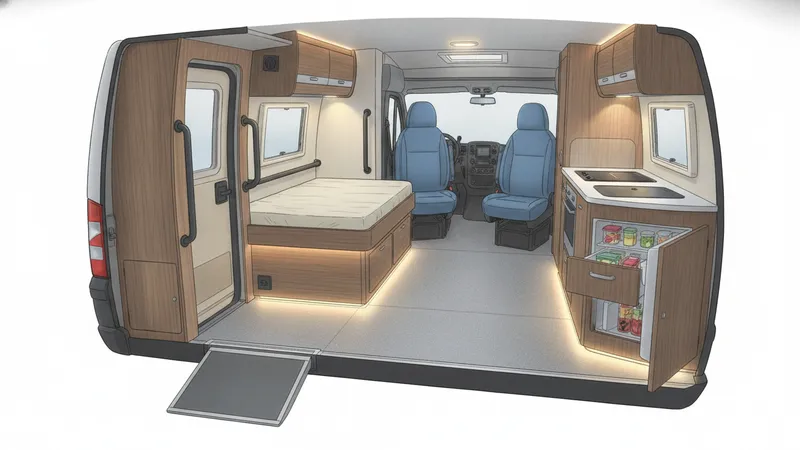
Accessibility aids such as grab rails, fold-out steps, or short ramps can assist with entry and movement, but they require planning for secure attachment and storage. Rails are often mounted near doors and bed edges where transfers occur most frequently. When planning storage, pull-out drawers and drawer-style fridges can lower the need to reach overhead, while labeled and frequently used items are commonly stored within arm’s reach. Lighting placement and contrast between surfaces may also assist with navigation at night.
Trade-offs between space efficiency and accessibility are common. For instance, reducing overhead cabinets to create more headroom can improve maneuverability but reduces storage capacity for items like linens and dry goods. Designers and occupants often prioritize storage for essential items and relocate less-used belongings to external compartments. When considering structural modifications, it may be useful to evaluate how changes affect vehicle center of gravity, seating safety, and legal compliance with vehicle modification standards relevant to where one travels.
Practical considerations include testing movements in a mock-up or temporary layout before committing to built-in fixtures, and planning for eventual changes as mobility needs evolve. Some people use modular components that can be reconfigured over time, which may prolong the vehicle’s usefulness without permanent structural changes. Maintenance access for systems such as water tanks and batteries should not be overlooked, since frequent checks and occasional servicing are typically part of ongoing living arrangements.