
Senior Camper Van Living: Daily Life, Routines, And Practical Considerations

Sleeping, Living Arrangements and Comfort Considerations for Senior Camper Van Living
Sleeping arrangements are a central comfort factor and often dictate daily routines. Choices range from fixed platform beds at a lower height to convertible sofas or bench systems that fold into beds. Fixed beds may reduce nightly setup and lower effort, while convertible solutions conserve daytime living space. Mattress selection can affect pressure distribution and joint comfort; foam or hybrid mattresses designed for limited spaces may better conform to a compact frame. Proper ventilation, window coverings to manage light, and the ability to control cabin temperature may all influence sleep quality.
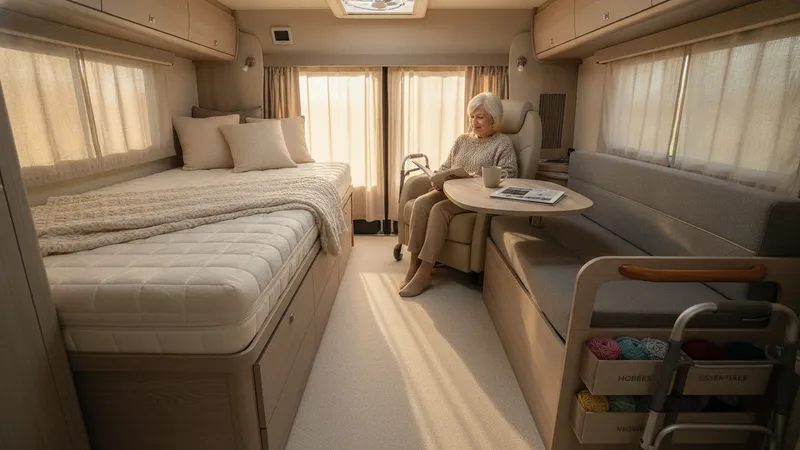
Daytime living arrangements influence social interaction, mobility, and rest. Seating that allows upright, stable posture with adequate back support can reduce strain during reading, eating, or using devices. Seat height and cushion firmness often matter for transfers from mobility aids. Arranging a small, reachable table area for meals and tasks may reduce repetitive movement. For those who spend more time inside the van, storage for hobbies or assistive devices positioned for easy access may support well-being and routine maintenance of social contacts.
Climate control and insulation are practical comfort considerations. Insulation quality and window coverings affect temperature regulation and condensation management; both can influence respiratory comfort and sleep. Portable or built-in heating solutions may be necessary in cooler climates but require attention to ventilation and carbon monoxide safety. Conversely, passive ventilation, fans, and reflective window coverings can reduce overheating in warm conditions. These measures can make daily routines such as dressing, resting, and meal preparation more predictable.
Ergonomic details may include bedside grab points, anti-slip mats near entryways, and easily reached night-time lighting. Small adjustments—such as adjustable reading lights, a bedside shelf for medications, or a low step stool stored near the bed—can reduce nightly exertion. Since individual needs can change over time, designing for adaptability, such as leaving space for future assistive equipment, may be a practical planning consideration rather than committing to a single permanent configuration.