
VoIP Systems For Small And Medium Businesses: Key Features And Core Components Explained

Security, access controls, and network quality for small and medium business VoIP systems
Protecting signalling and media traffic is an important operational consideration. Transport layer security for SIP (SIP over TLS) and SRTP for media encryption are common controls that may reduce the risk of eavesdropping. Session border controllers can perform topology hiding, protocol normalization, and rate limiting, which may reduce exposure to certain classes of attacks. Access controls such as strong authentication for administrative interfaces and role-based permissions for provisioning tools can help limit the impact of compromised credentials.
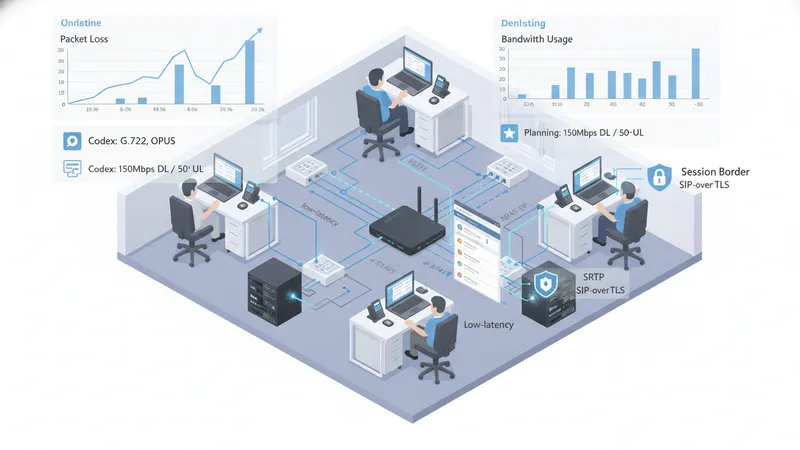
Network-level measures often include VLAN segmentation to separate voice and data traffic, and Quality of Service configurations to prioritise voice packets across switches and routers. These steps may reduce latency and jitter under mixed-traffic conditions. Bandwidth planning is also relevant: organisations commonly estimate per-call bandwidth for chosen codecs, multiply by expected concurrency, and add headroom for growth. Network monitoring tools can then provide visibility into packet loss, latency, and jitter trends that may affect perceived call quality.
Threat vectors specific to IP telephony include toll fraud, denial-of-service attacks, and SIP enumeration. Safeguards may include limiting tolls to authorised destination sets, using access control lists on SIP servers, and monitoring call patterns for anomalous behaviour that may indicate misuse. Regular firmware and software updates for endpoints and servers can address known vulnerabilities, while logging and alerting systems may assist in early detection of abusive activity. Security measures may introduce operational complexity, so teams often balance protective depth with manageability.
Reliability and resilience can be improved through redundancy and failover design. Redundant SIP trunks, geographically separate control planes for hosted services, or backup PSTN gateways for emergency calling are examples of approaches that may reduce single points of failure. Backup and configuration export routines for on-premises systems can shorten recovery time after a failure. Careful planning for power, network, and service continuity often pays off when maintaining acceptable availability for organisational communications.